Impaired Boating Laws in Canada (Boating Under the Influence)
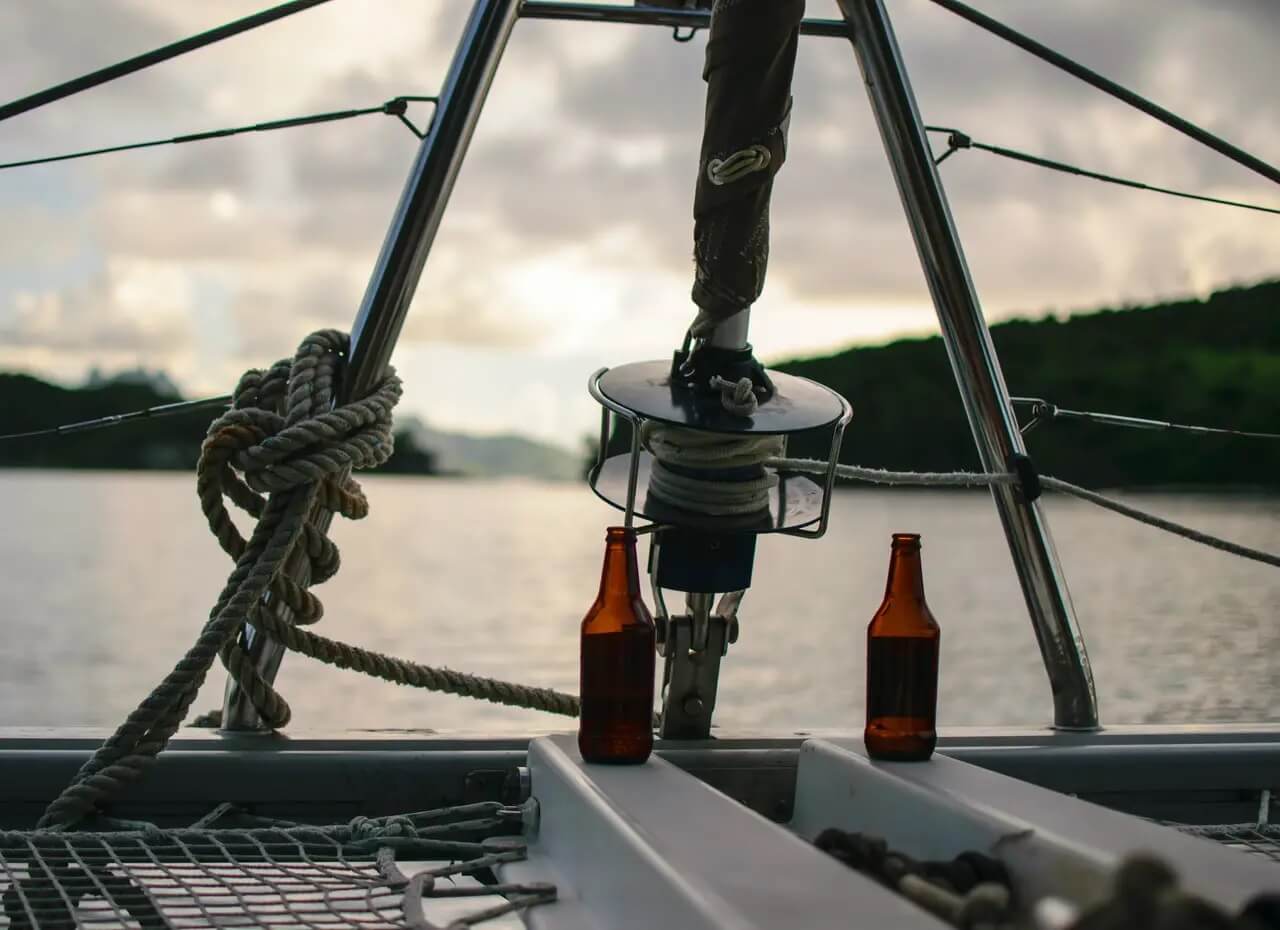
Just like drunk driving, boating under the influence is a serious offense under Canadian law. Not only is it illegal, drinking while driving a boat makes you a danger to yourself and others. In fact, more than half of all boating accidents in Canada are linked to the consumption of alcohol.
While the legal consequences may vary from province to province, operating a pleasure craft while under the influence of alcohol is against the law and dangerous everywhere in Canada. Don’t wait to have an accident, get fined or have your licence taken away! Keep reading to find out what you can and can’t do when it comes to taking a ‘booze cruise’.
Key takeaways
- Drinking and driving a boat is illegal in Canada.
- There are specific limits for alcohol and drug consumption; exceeding those limits means you will be considered ‘impaired’ and punished accordingly.
- Federal and provincial boating and drinking laws sometimes differ.
- It’s possible to drink on a boat legally if the boat is not underway and you have appropriate facilities, including a toilet and kitchen.
Table of contents
Boating under the influence: The Criminal Code
In Canada, it is also illegal to operate any motorized vehicle, including a boat, while under the influence of alcohol or drugs.
According to section 320.14 (1) of the Criminal Code of Canada:
Everyone commits an offence who (. . . ) operates a conveyance while the person’s ability to operate it is impaired to any degree by alcohol or a drug or by a combination of alcohol and a drug.
Alcohol limits for operating a boat
According to the Criminal Code, you are “impaired” if your Blood Alcohol Concentration (BAC) level is 80mg or higher, as determined by a breathalyzer or blood test. It does not matter whether you have a high tolerance for alcohol, the law will not vary.
Drug limits for operating a boat
After cannabis was legalized in 2018, federal laws were revised. Now, impaired boating includes operating a vessel while having a higher than acceptable blood concentration level of THC or if any other drug is detectable in your system, in addition to or in combination with alcohol.
Tetrahydrocannabinol (THC) limits
Your ability is considered impaired if you have:
- Between 2 nanograms (ng) and 5 ng of THC per ml of blood (less serious offence)
- 5 ng of THC or more per ml of blood (more serious offence)
Limits for other drugs
Any detectable level of certain other drugs like LSD, psilocybin ("magic mushrooms"), ketamine, PCP, cocaine, methamphetamine, 6-mam, etc. will lead to you be considered impaired while driving a boat.
The enforcement officer’s assessment
Even if you are below the specific BAC or drug limits, you can still be charged if an enforcement officer observes that your ability to operate the boat is compromised by alcohol or drugs. This relies on the officer's observations and potentially Standardized Field Sobriety Tests (SFSTs) or Drug Recognition Expert (DRE) evaluations, or if the officer (or other boaters) observe any of the following:
- Dangerous or careless operation of your boat
- Failure to follow navigation rules
- Errors in judgment (distances, speeds, or hazards)
- Forgetting to turn on lights
- Difficulties with docking or launching
- Inappropriate speed
Punishment for BUI (Boating Under the Influence) in Canada
The Criminal Code states that any person convicted of BUI for the first time will be charged up to $1000. Keep in mind that this is only one part of the punishment. Provincial laws include further consequences, such as:
- At least two weeks of prison time (or 30 days for a second offence, and 120 days for a third offence)
- The suspension of your driver’s license for a year (depending on the province)
- The obligation to take a costly boating course
- The doubling or even tripling of your insurance costs.
Provincial and territorial drinking and boating laws
You should always contact provincial or territorial law enforcement authorities for more information before taking to the water with alcohol on board. You can also contact the RCMP to obtain location-specific information. Keep in mind that laws do change, so stay informed.
How to drink on your boat legally in Canada
Enjoying a drink onboard is possible, but only if you follow the rules. Otherwise, the consequences can be dire.
While it is illegal to operate your boat under the influence, you can have a drink on your boat if your boat is anchored alongside a dock and has:
- permanent cooking facilities
- permanent sleeping facilities
- a permanent toilet
The National Boating Safety School safe boating course will prepare you to obtain your Pleasure Craft Operator Card
The National Boating Safety School offers a Transport Canada approved boating safety course that will prepare you for the official online boating exam. Once you pass the test, you will be awarded your lifetime Pleasure Craft Operator Card. Register today!
Frequently Asked Questions
1. Do laws related to boating under the influence differ from province to province?
Yes, drinking and boating laws differ from province to province. Consult your local provincial authority for details:
2. How is 'impaired' defined when driving a boat?
In Canada, being impaired while operating a boat means your ability to safely control the vessel is diminished to any degree due to the consumption of alcohol, drugs or a combination of both.
Being impaired doesn't necessarily mean you're visibly drunk or high. It refers to any level of influence that affects your judgment, coordination, reaction time, and overall capacity to operate the boat safely.
Sources
- Government of Canada. Criminal Code (R.S.C., 1985, c. C-46). Justice Laws Website. https://laws-lois.justice.gc.ca/eng/acts/c-46/section-320.14.html
- Legalline. How do police test for cannabis-impairment? https://www.legalline.ca/legal-answers/how-is-impairment-due-to-cannabis-tested-by-the-police/
- CRIMINAL CODE HELP. Operating a Boat Under the Influence. Impaired Boating Laws in Canada. https://www.criminalcodehelp.ca/offences/conveyances/impaired-boating/
- Canadian Red Cross. BOATING FATALITIES IN CANADA. . https://cdn.redcross.ca/prodmedia/crc/documents/What-We-Do/Swimming-Water-Safety/ws-boating-infographic-EN-2014.pdf
- Water Temperature. Canada. https://seatemperature.net/country/canada
Related CONTENT
LAtest ARTICLES