
Types of Diving Flags: What Do They Look Like and What Do They Mean?

Underwater diving can be dangerous, since divers are usually sharing the waterways with plenty of boaters. To minimize the risk of accidents, Transport Canada has implemented regulations requiring the use of diving flags.
Here’s everything you need to know about diver flags so you can stay safe while diving, or while boating near divers who are in the water.
Key takeaways
- Boaters and divers often share the same waters, which poses a safety risk.
- Transport Canada has created regulations for the use of diving flags to minimize the danger.
- Diving flags are mandatory piece of safety equipment in Canada.
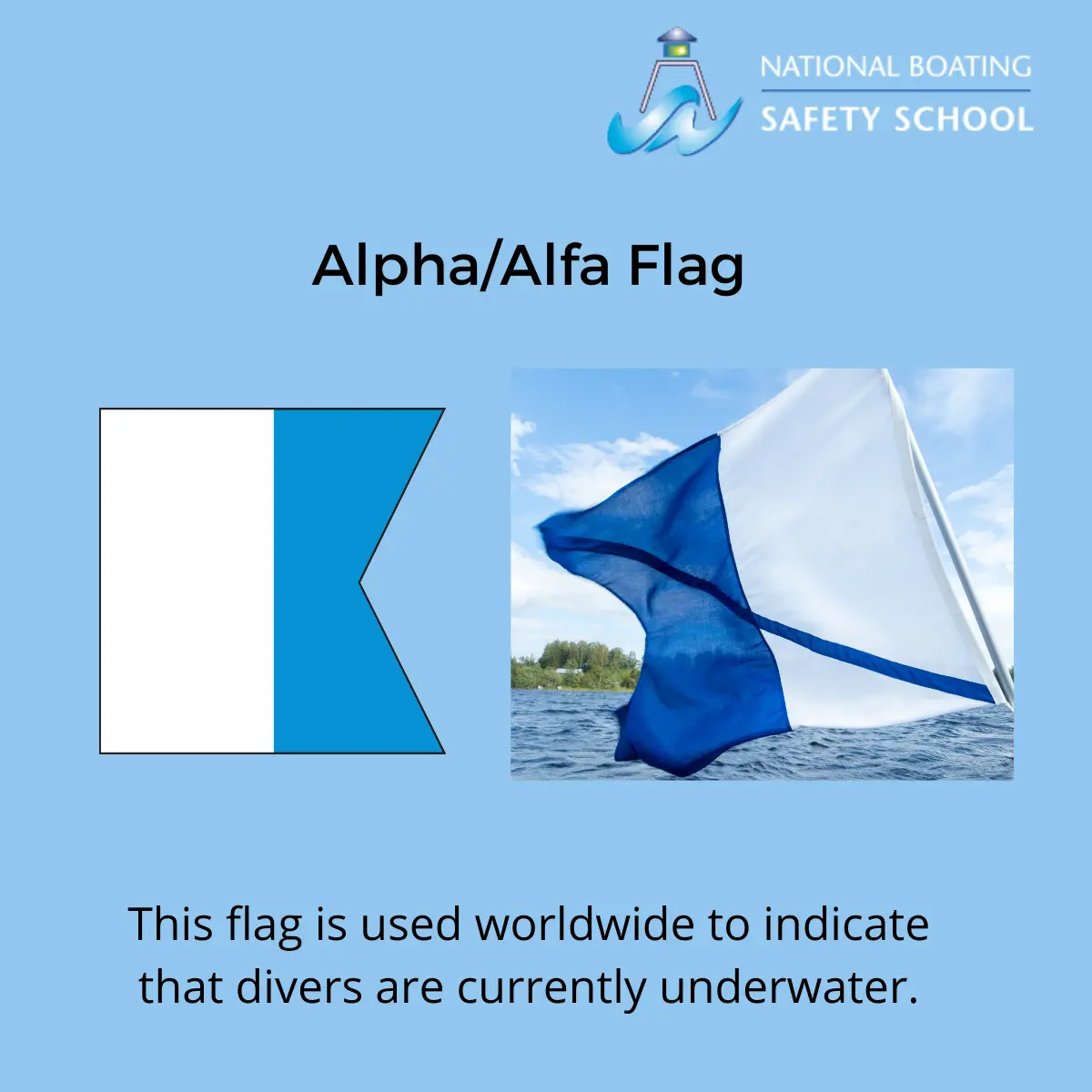
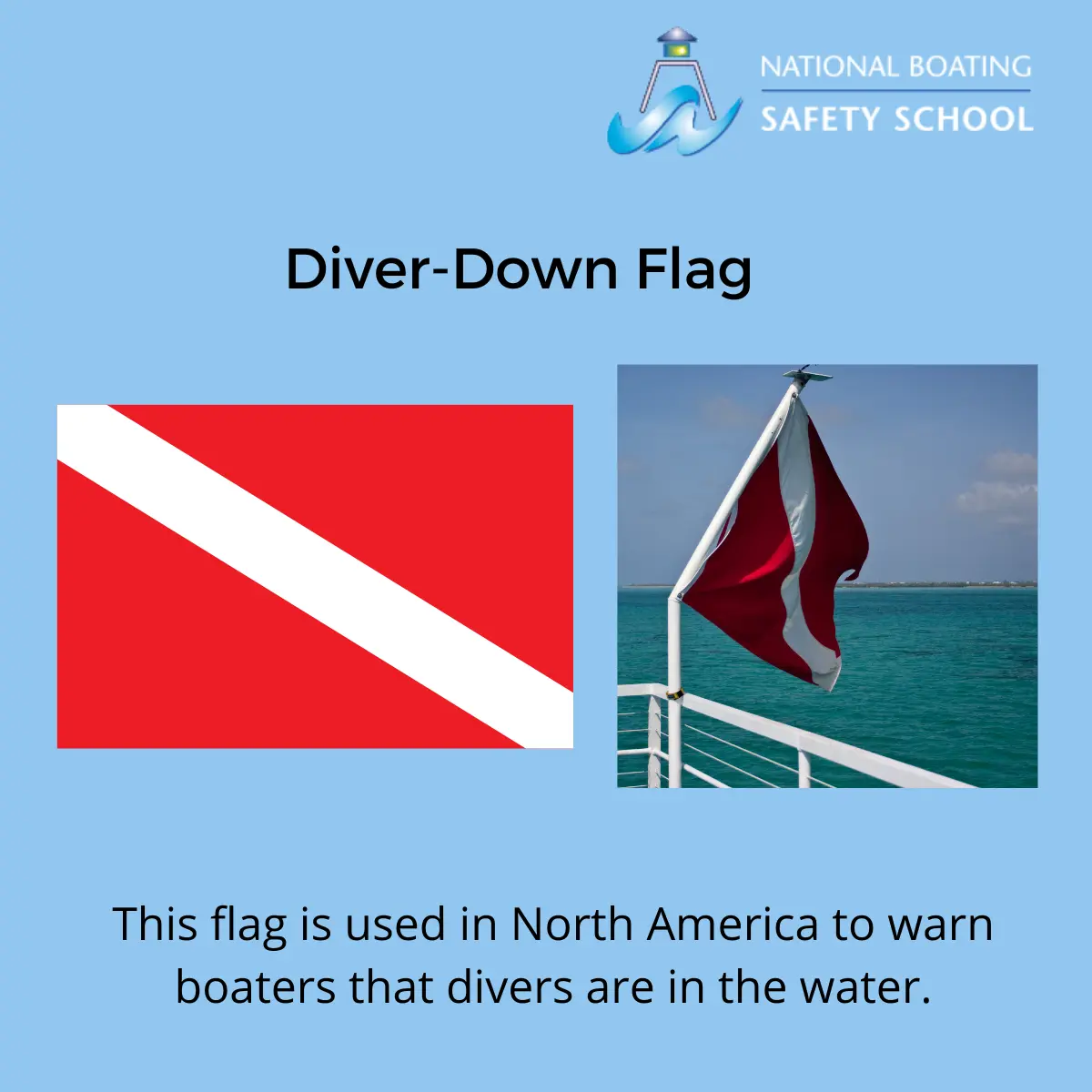
- There are two main types of diving flags: the Alpha flag (blue and white) and the Diver-Down flag (red with white diagonal stripe).
- Pleasure craft operators are strongly advised to maintain a safe distance of at least 100 meters (328 feet) from a diving flag.
- Divers are generally advised to stay within 100 meters of their displayed flag or buoy.
Table of contents
What is a diving flag?
A diving flag an important piece of boating safety equipment to have on board any vessel that is involved in diving activities. These flags help keep divers, spearfishers and freedivers safe while they are in the water.
What do different diving flags mean?
The purpose of a diving flag is to indicate to other boaters that divers are currently under the water in the area. Pleasure boat operators can adjust their speed accordingly and avoid areas where divers are active, so everyone can stay safe.
Like marine buoys and markers, different diving flags send different signals to boaters. All divers and boaters should know what each type of flag means before going out on the water.
Alfa/Alpha Flag
According to the International Code of Signals, the Alfa or Alpha flag is used worldwide to indicate that divers are currently underwater. Specifically, this blue and white flag indicates the presence of divers within 100 m of the vessel flying the flag. It also signals that the vessel in question currently has reduced maneuverability.
The Alpha flag signals nearby vessels to avoid the diving area. Boaters who see this flag should keep a safe distance and reduce their speed to avoid disturbing or injuring the divers.
The Alpha flag must be rigid and placed at least 0.5 m up on the mast so that it is easily visible from a distance. Depending on visibility and other factors, it may also be displayed alongside the red diver-down flag.
Diver-Down Flag
The diver-down flag is red with a white diagonal stripe. It is also used to indicate the presence of divers in the water. This flag is displayed on boats at anchor, on buoys in a diving zone, or even to the diver so that it follows them through the water. It is mainly used in North America.
A diver down flag flown from a buoy should be at least 50 cm long. It should be flown high enough above the water so that nearby vessels can see it, even in choppy conditions or high winds. The buoy or boat it is attached to must be stable so that the flag cannot topple over and leave the divers without any indication of their presence.
Other diver flags
Other diver flags can be used during diving operations by NATO and other official bodies. These include the red and white St. Andrew’s Cross, among others. However, it is rare to see these flags used by pleasure boaters in Canada.
When to use diving flags
Diving flags should be used whenever diving activities are taking place, in all types of waterways. These flags indicate the presence of divers to other boaters so that they can keep their distance and avoid accidents.
The National Boating Safety School safe boating course will prepare you to obtain your Pleasure Craft Operator Card
The National Boating Safety School offers a Transport Canada approved boating safety course that will prepare you for the official online boating exam. Once you pass the test, you will be awarded your lifetime Pleasure Craft Operator Card. Register today!
Frequently Asked Questions
1. Is one type of diving flag legally required over the other?
The Alpha Flag is generally the internationally recognized navigational signal required to be displayed on a vessel that is tending a diver and restricted in its ability to maneuver.
The Red and White Diver Down Flag is prescribed by the Private Buoy Regulations to mark the actual area where diving operations are taking place. Often, a vessel tending a free-swimming diver will use the red and white flag on a buoy to mark the area, and they may also fly the Alpha flag if their maneuverability is restricted.
2. How far away must I stay from a diving flag?
Transport Canada strongly advises that pleasure craft operators maintain a safe distance of at least 100 meters (328 feet) from the flag wherever possible.
If you are in a confined waterway (like a narrow channel, river, or inlet) where you cannot maintain that 100-meter distance, you must slow down to a minimum speed (slow-no wake speed), proceed with caution, and pass as far away from the diving area as possible.
3. What are the responsibilities of the divers and the dive boat operator?
Divers are generally advised to remain within 100 meters (328 feet) of the displayed flag or buoy. The dive boat operator must ensure the flag is displayed properly.
Sources
- Government of Canada. Bulletin No.: 10/1985 Subject: Day Signals that Identify Diving Operations. https://tc.canada.ca/en/marine-transportation/marine-safety/ship-safety-bulletins/bulletin-no-10-1985
- Government of Canada. Private Buoy Regulations (SOR/99-335) Justice Laws Website https://laws-lois.justice.gc.ca/eng/regulations/sor-99-335/FullText.html
- Wikipedia. International Code of Signals. https://en.wikipedia.org/wiki/International_Code_of_Signals
Related CONTENT