Essential Boat Safety Equipment (+Checklist)
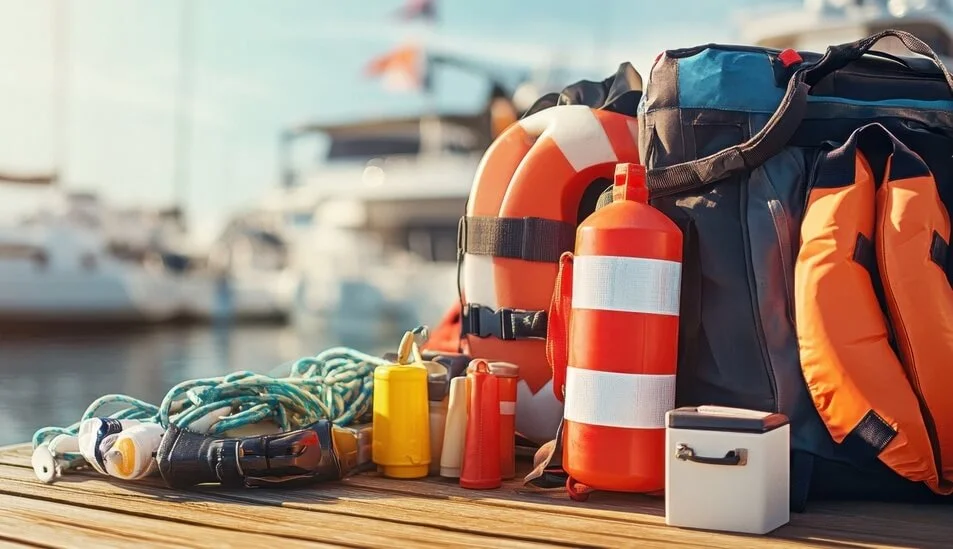
Approved boating safety equipment is a requirement on recreational pleasure craft in Canada.
There are 22 types of safety equipment regulated by Canadian boating law. For detailed information about which types of equipment are required for each type of boat, and to find out which types of equipment can be substituted for others, refer to the complete guide below. Just click on your boat type and read the list, or download the associated printable checklist.
Key takeaways
- By law, pleasure craft in Canada must be equipped with basic boating safety equipment.
- They type of vessel will dictate the types of required safety equipment. Boaters must follow the rules as they apply to human-powered pleasure craft, pleasure craft up to 6 m (19’8”), pleasure craft over 6 m and up to 9 m (19’8” – 29’6”), pleasure craft over 9 m and up to 12 m (29’6” – 39’4”), pleasure craft over 12 m and up to 24 m (39’4” – 78’9”), and pleasure craft over 24 m (78’9”).
- Some exceptions and special notes apply. Boaters are responsible for understanding and obeying all safety equipment rules and regulations, or face a fine of $200.
Table of contents
- Human-powered pleasure craft
- Pleasure craft up to 6 m (19’8”)
- Pleasure craft over 6 m and up to 9 m (19’8” – 29’6”)
- Pleasure craft over 9 m and up to 12 m (29’6” – 39’4”)
- Pleasure craft over 12 m and up to 24 m (39’4” – 78’9”)
- Pleasure craft over 24 m (78’9”)
- Important Notes and Asterisks
- Equipment exemption for some types of pleasure crafts
- Other equipment that can increase safety on board a pleasure craft
- Frequently Asked Questions
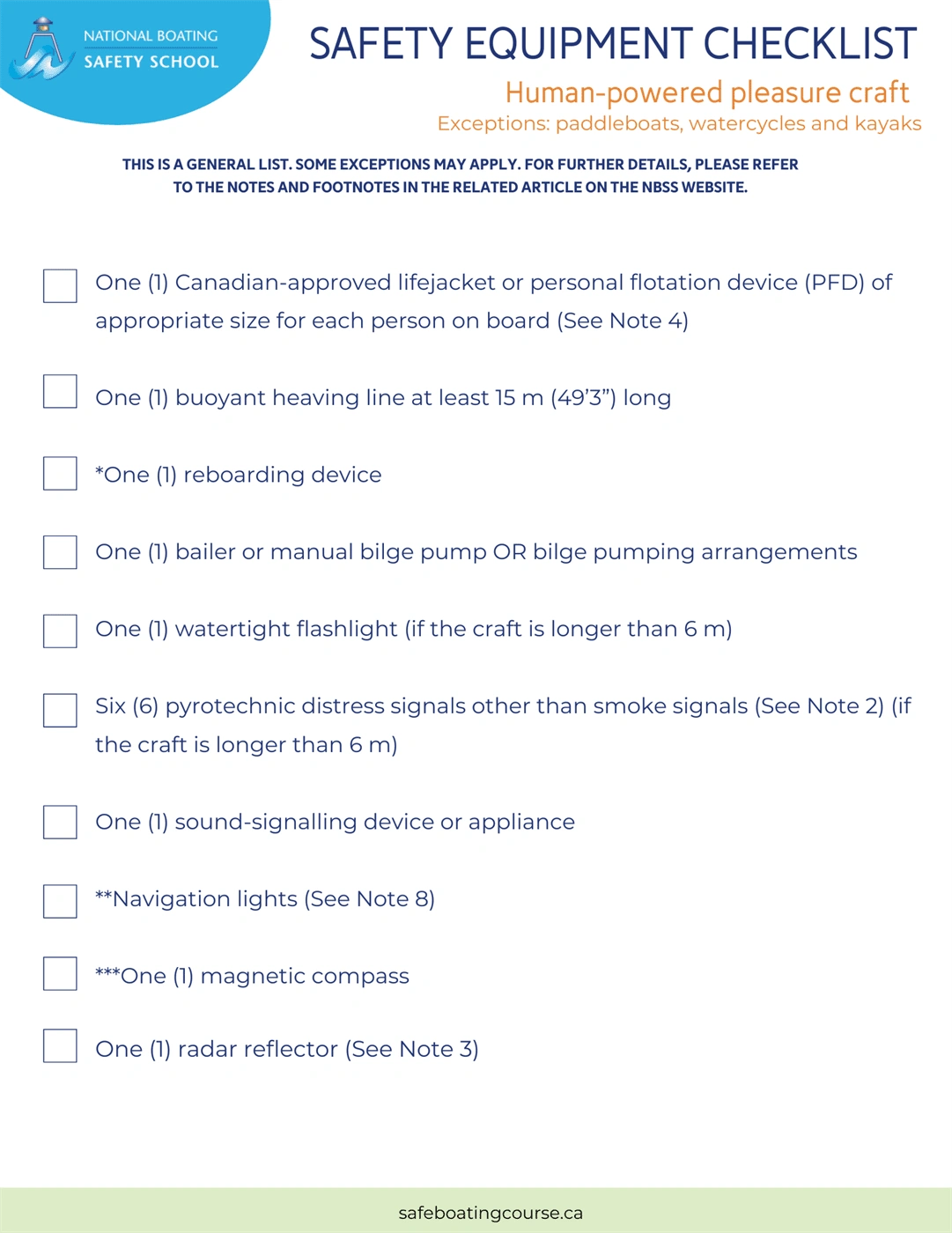
Human-powered pleasure craft
Exceptions: paddleboats, watercycles and kayaks (See Note 9)
- One (1) Canadian-approved lifejacket or personal flotation device (PFD) of appropriate size for each person on board (See Note 4)
- One (1) buoyant heaving line at least 15 m (49’3”) long
- *One (1) reboarding device
- One (1) bailer or manual bilge pump OR bilge pumping arrangements
- One (1) watertight flashlight (if the craft is longer than 6 m)
- Six (6) pyrotechnic distress signals other than smoke signals (See Note 2) (if the craft is longer than 6 m)
- One (1) sound-signalling device or appliance
- **Navigation lights (See Note 8)
- ***One (1) magnetic compass
- One (1) radar reflector (See Note 3)
Safety equipment checklist for human-powered pleasure craft
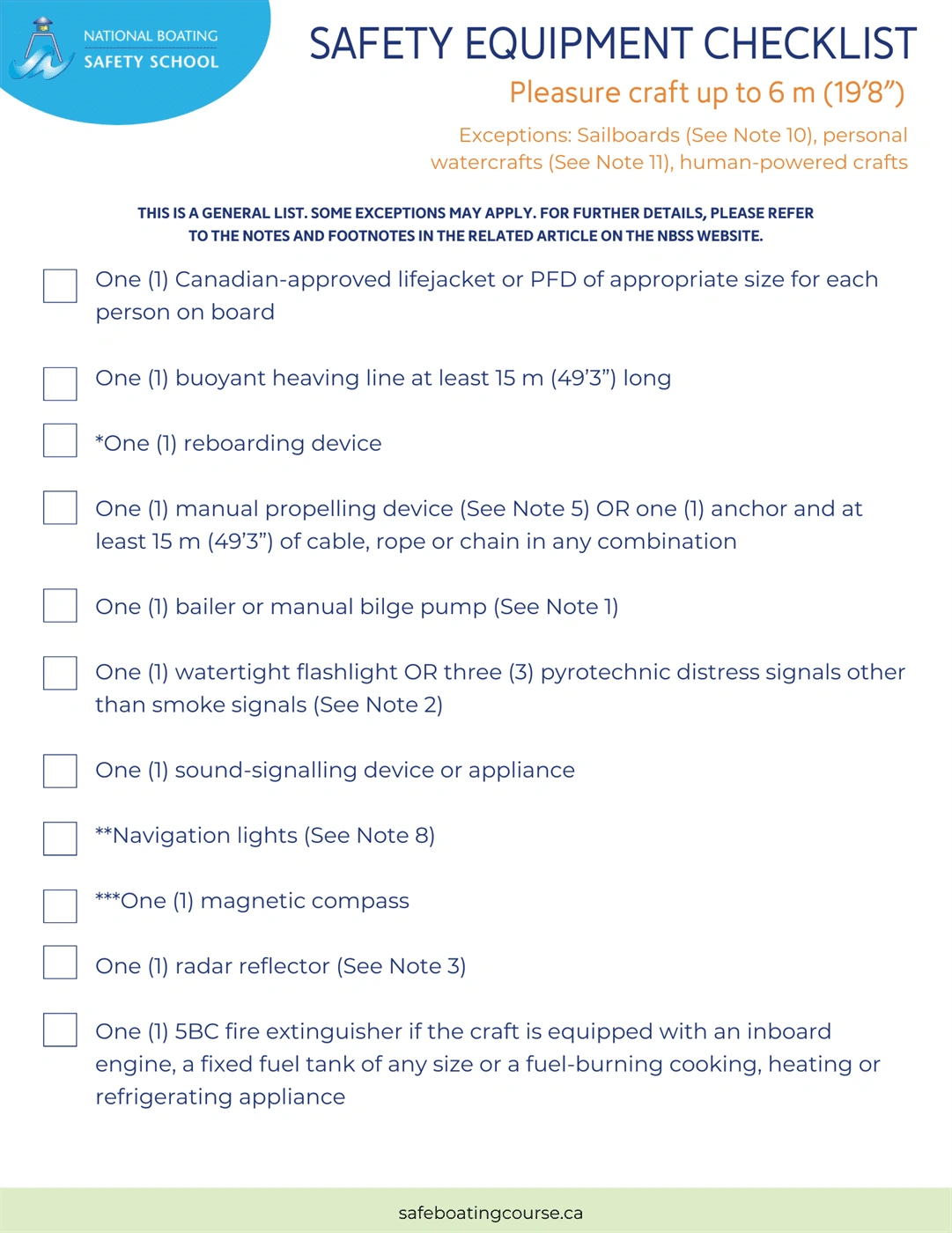
Pleasure craft up to 6 m (19’8”)
Exceptions: Sailboards (See Note 10), personal watercrafts (See Note 11), human-powered crafts
- One (1) Canadian-approved lifejacket or PFD of appropriate size for each person on board
- One (1) buoyant heaving line at least 15 m (49’3”) long
- *One (1) reboarding device
- One (1) manual propelling device (See Note 5) OR one (1) anchor and at least 15 m (49’3”) of cable, rope or chain in any combination
- One (1) bailer or manual bilge pump (See Note 1)
- One (1) watertight flashlight OR three (3) pyrotechnic distress signals other than smoke signals (See Note 2)
- One (1) sound-signalling device or appliance
- **Navigation lights (See Note 8)
- ***One (1) magnetic compass
- One (1) radar reflector (See Note 3)
- One (1) 5BC fire extinguisher if the craft is equipped with an inboard engine, a fixed fuel tank of any size or a fuel-burning cooking, heating or refrigerating appliance
Safety equipment checklist for pleasure craft up to 6 m:
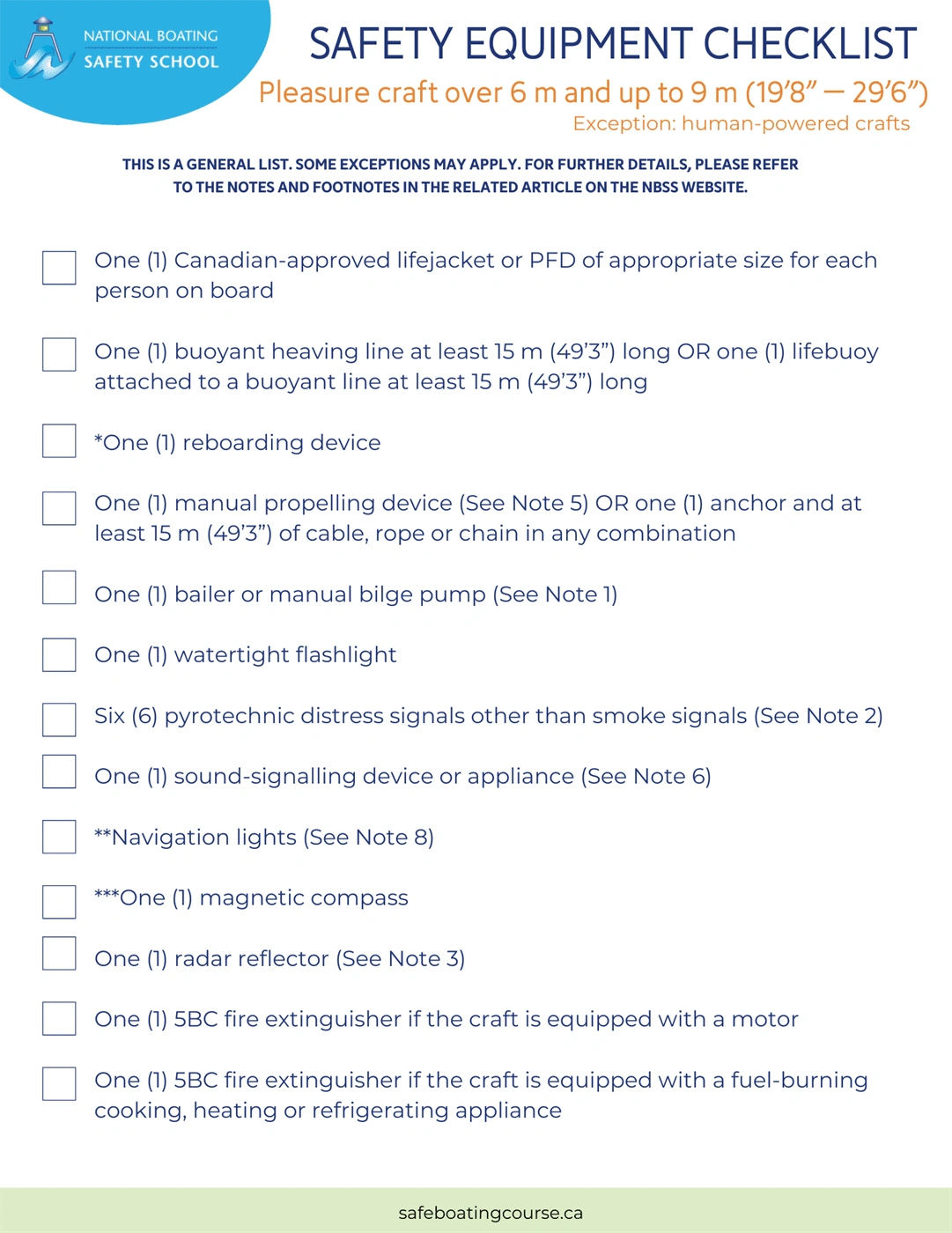
Pleasure craft over 6 m and up to 9 m (19’8” – 29’6”)
Exceptions: human-powered crafts
- One (1) Canadian-approved lifejacket or PFD of appropriate size for each person on board
- One (1) buoyant heaving line at least 15 m (49’3”) long OR one (1) lifebuoy attached to a buoyant line at least 15 m (49’3”) long
- *One (1) reboarding device
- One (1) manual propelling device (See Note 5) OR one (1) anchor and at least 15 m (49’3”) of cable, rope or chain in any combination
- One (1) bailer or manual bilge pump (See Note 1)
- One (1) watertight flashlight
- Six (6) pyrotechnic distress signals other than smoke signals (See Note 2)
- One (1) sound-signalling device or appliance (See Note 6)
- **Navigation lights (See Note 8)
- ***One (1) magnetic compass
- One (1) radar reflector (See Note 3)
- One (1) 5BC fire extinguisher if the craft is equipped with a motor
- One (1) 5BC fire extinguisher if the craft is equipped with a fuel-burning cooking, heating or refrigerating appliance
Safety equipment checklist for pleasure craft between 6 m and 9 m:
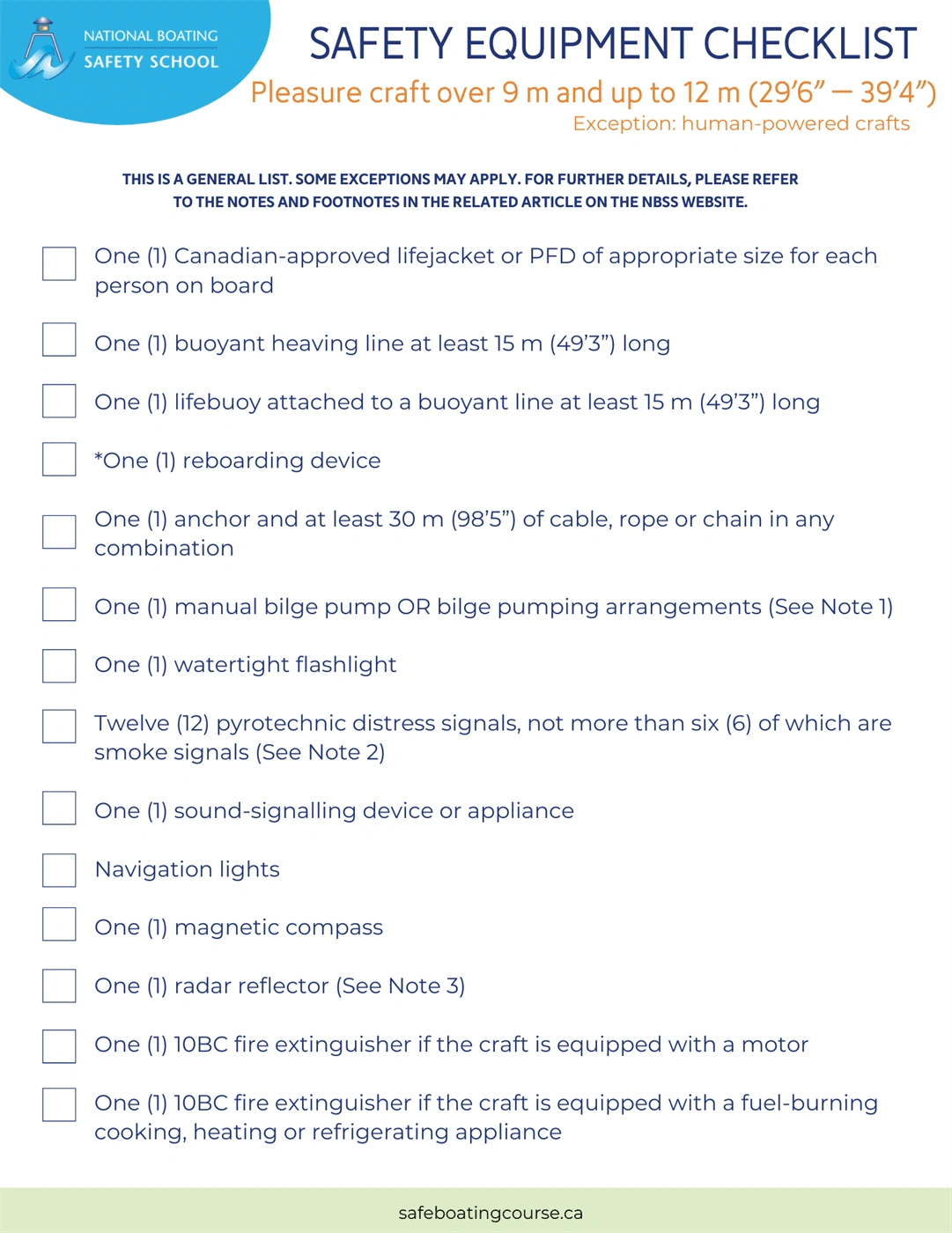
Pleasure craft over 9 m and up to 12 m (29’6” – 39’4”)
Exceptions: human-powered crafts
- One (1) Canadian-approved lifejacket or PFD of appropriate size for each person on board
- One (1) buoyant heaving line at least 15 m (49’3”) long
- One (1) lifebuoy attached to a buoyant line at least 15 m (49’3”) long
- *One (1) reboarding device
- One (1) anchor and at least 30 m (98’5”) of cable, rope or chain in any combination
- One (1) manual bilge pump OR bilge pumping arrangements (See Note 1)
- One (1) watertight flashlight
- Twelve (12) pyrotechnic distress signals, not more than six (6) of which are smoke signals (See Note 2)
- One (1) sound-signalling device or appliance
- Navigation lights
- One (1) magnetic compass
- One (1) radar reflector (See Note 3)
- One (1) 10BC fire extinguisher if the craft is equipped with a motor
- One (1) 10BC fire extinguisher if the craft is equipped with a fuel-burning cooking, heating or refrigerating appliance
Safety equipment checklist for pleasure craft between 9 m and 12 m:
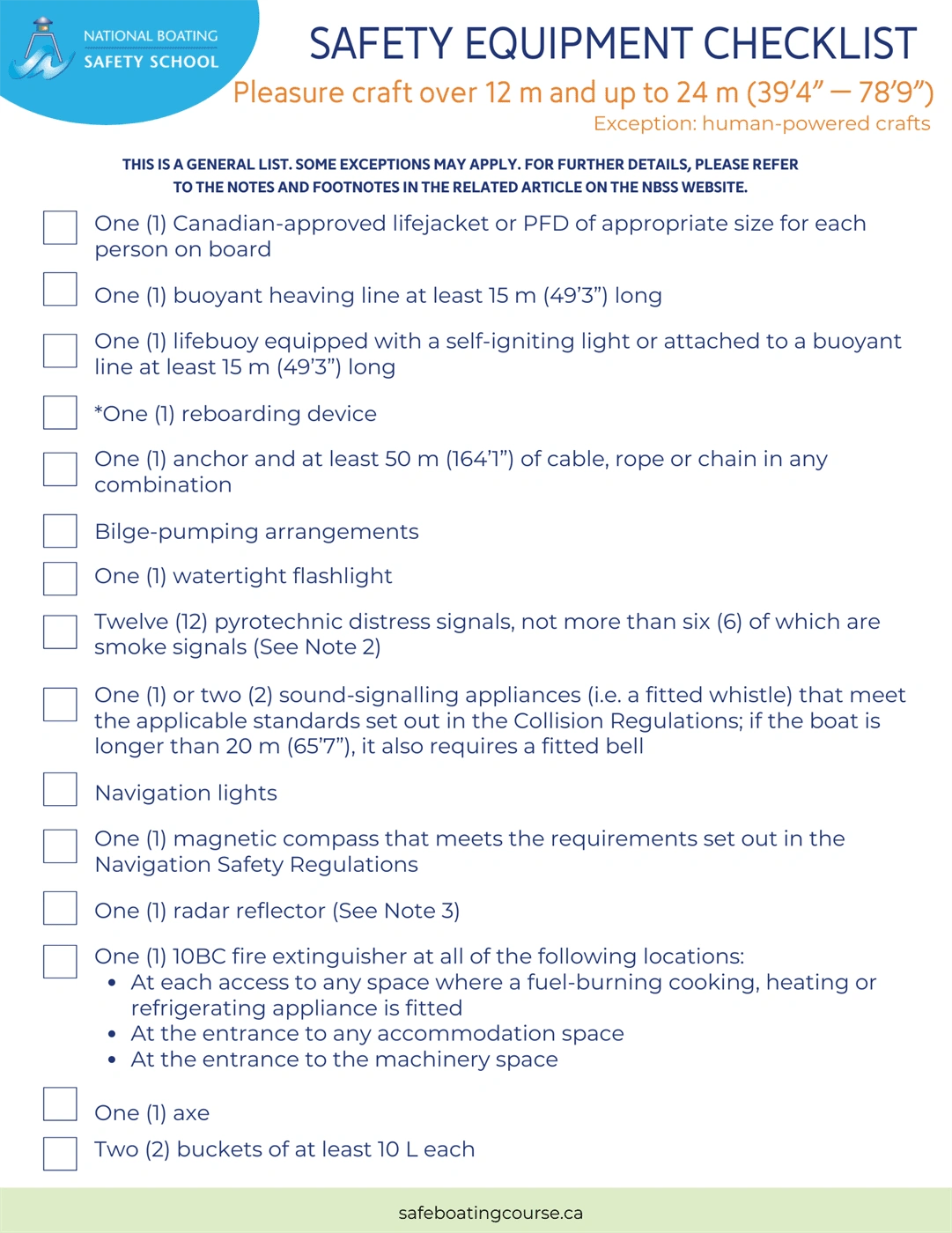
Pleasure craft over 12 m and up to 24 m (39’4” – 78’9”)
Exceptions: human-powered crafts
- One (1) Canadian-approved lifejacket or PFD of appropriate size for each person on board
- One (1) buoyant heaving line at least 15 m (49’3”) long
- One (1) lifebuoy equipped with a self-igniting light or attached to a buoyant line at least 15 m (49’3”) long
- *One (1) reboarding device
- One (1) anchor and at least 50 m (164’1”) of cable, rope or chain in any combination
- Bilge-pumping arrangements
- One (1) watertight flashlight
- Twelve (12) pyrotechnic distress signals, not more than six (6) of which are smoke signals (See Note 2)
- One (1) or two (2) sound-signalling appliances (i.e. a fitted whistle) that meet the applicable standards set out in the Collision Regulations; if the boat is longer than 20 m (65’7”), it also requires a fitted bell
- Navigation lights
- One (1) magnetic compass that meets the requirements set out in the Navigation Safety Regulations
- One (1) radar reflector (See Note 3)
- One (1) 10BC fire extinguisher at all of the following locations:
- At each access to any space where a fuel-burning cooking, heating or refrigerating appliance is fitted
- At the entrance to any accommodation space
- At the entrance to the machinery space
15. Two (2) buckets of at least 10 L each
Safety equipment checklist for pleasure craft between 12 m and 24 m:
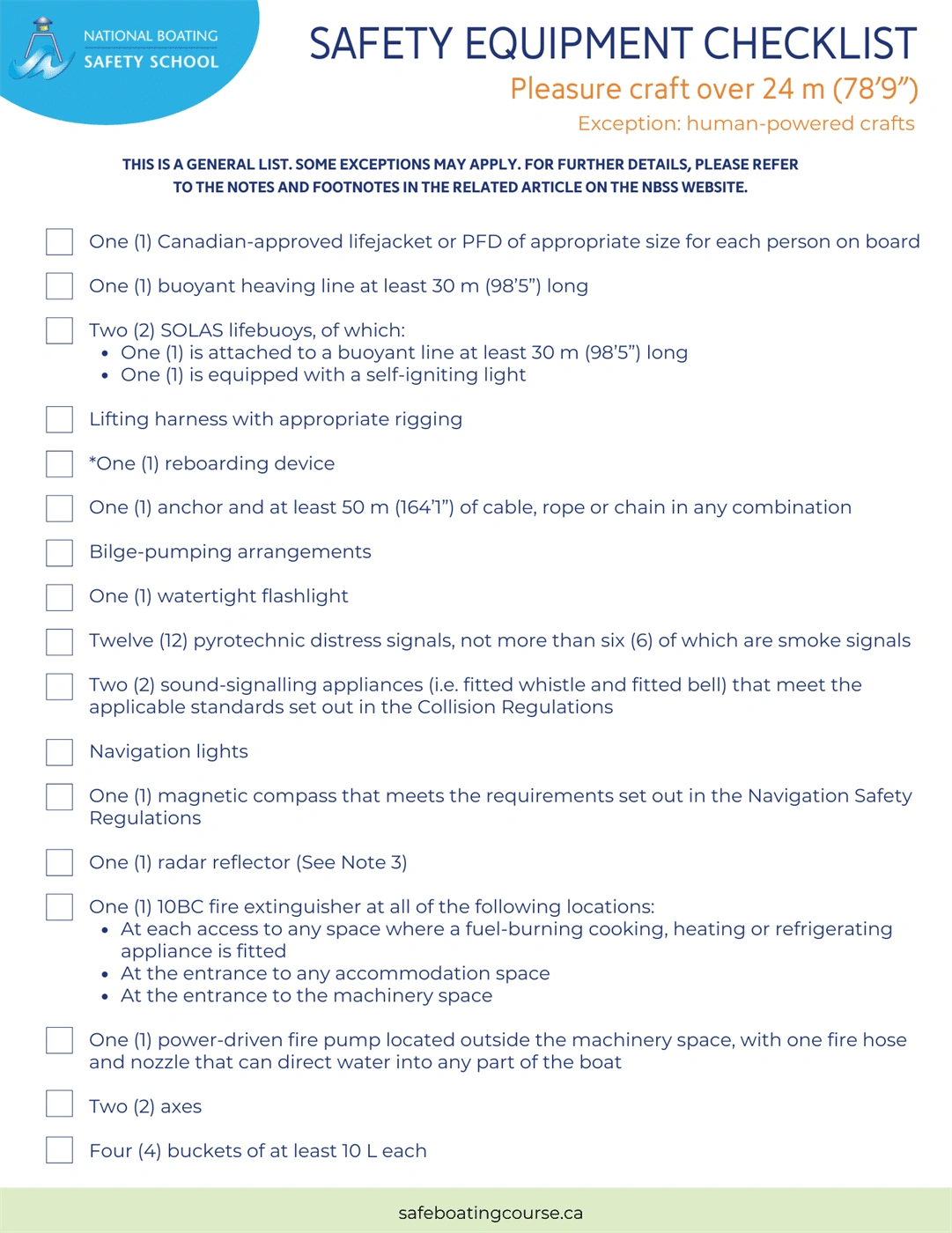
Pleasure craft over 24 m (78’9”)
Exceptions: human-powered crafts
- One (1) Canadian-approved lifejacket or PFD of appropriate size for each person on board
- One (1) buoyant heaving line at least 30 m (98’5”) long
- Two (2) SOLAS lifebuoys, of which:
- One (1) is attached to a buoyant line at least 30 m (98’5”) long
- One (1) is equipped with a self-igniting light
- Lifting harness with appropriate rigging
- *One (1) reboarding device
- One (1) anchor and at least 50 m (164’1”) of cable, rope or chain in any combination
- Bilge-pumping arrangements
- One (1) watertight flashlight
- Twelve (12) pyrotechnic distress signals, not more than six (6) of which are smoke signals
- Two (2) sound-signalling appliances (i.e. fitted whistle and fitted bell) that meet the applicable standards set out in the Collision Regulations
- Navigation lights
- One (1) magnetic compass that meets the requirements set out in the Navigation Safety Regulations
- One (1) radar reflector (See Note 3)
- One (1) 10BC fire extinguisher at all of the following locations:
- At each access to any space where a fuel-burning cooking, heating or refrigerating appliance is fitted
- At the entrance to any accommodation space
- At the entrance to the machinery space
13. Two (2) axes
14. Four (4) buckets of at least 10 L each
Safety equipment checklist for pleasure craft over 24 m:
Important Notes and Asterisks
Note 1. Exception: a bailer or manual bilge pump is not required for a boat that cannot hold enough water to make it capsize or has watertight compartments that are sealed and not readily accessible (i.e. pontoons).
Note 2. Exception: pyrotechnic distress signals (flares) are not required for a boat that is operating on a river, canal or lake small enough that it can never be more than 1 nautical mile (1.852 km) from shore. Other exception: if the boat has no sleeping quarters and is engaged in an official competition or in final preparation for an official competition.
Note 3. A radar reflector is required on boats under 20 m (65’7”) and boats that are built mainly of non-metallic material. However, it is not required if the boat operates in limited traffic conditions, favourable environmental conditions and daylight, where having radar reflectors is not essential to the safety of those on board. A radar reflector is also not required if the size of the boat makes it impractical to install (it should be installed at least 4 m above the water line).
Note 4. A PFD or life jacket on board any human-powered pleasure craft operated in whitewater must be inherently buoyant.
Note 5. A manual propelling device can be a pair of oars, a paddle or any other device that uses human power to propel the boat. The rudder of a small sailboat can also be moved from left to right to create forward motion.
Note 6. A sound-signalling device can be a pealess whistle, a compressed gas horn or an electric horn.
Note 7. N/A
Note 8. Human-powered pleasure crafts and sailing vessels less than 7 m (23’4”) in length can meet this requirement with a watertight flashlight.
Note 9. If every person on board a paddleboat, watercycle or kayak is wearing a Canadian-approved PFD or lifejacket of appropriate size, the only equipment required on board is a sound-signalling device and a watertight flashlight, and only if the boat is being operated after sunset, before sunrise or in periods of restricted visibility.
Note 10. If a person is operating a sailboard or kiteboard and is wearing a personal flotation device of appropriate size, the only equipment required on board is a sound-signalling device and a watertight flashlight, and only if the sailboard or kiteboard is being operated after sunset, before sunrise or in periods of restricted visibility.
Note 11. If every person on board a personal watercraft (PWC) is wearing a Canadian-approved PFD or lifejacket of appropriate size, then the only equipment required on board is a sound-signalling device, a watertight flashlight OR 3 pyrotechnic distress signals other than smoke signals, a magnetic compass if the PWC is being operated out of sight of daymarks, and finally, navigation lights if the PWC is being operated after sunset, before sunrise or in periods of restricted visibility.
* Only required if the vertical height that must be climbed to reboard the boat from the water (freeboard) is over 0.5 m (1’8”).
** Only required if the boat is operated after sunset, before sunrise or in periods of restricted visibility (fog, heavy rain, blizzard, etc.).
***Not required if the boat is 8 m (26’3”) or less and being operated in sight of daymarks.
Equipment exemption for some types of pleasure crafts
In certain conditions, the following vessels may be exempt from meeting the minimum safety equipment requirements listed above:
- A racing canoe
- A racing kayak
- A rowing shell
- A closed multiple division multihull
- A craft under 6 m that is not mechanically powered
- A paddleboat or watercycle
- A personal watercraft
- A sailboard
- A bailer type closed hull
Other equipment that can increase safety on board a pleasure craft
To deal with situations beyond your control, you can add other safety equipment in addition to the minimum required by law. This equipment can be stored in watertight compartments, but should remain easily accessible (not locked) to everyone on board. Here are a few suggestions:
- A knife
- A first aid kit
- Emergency rations
- Drinking water
- Dry clothing
- A VHF radio
- A compass
- A tool box with spare parts for the engine
- A roll of duct tape
- Matches or a lighter
The National Boating Safety School safe boating course will prepare you to obtain your Pleasure Craft Operator Card
The National Boating Safety School offers a Transport Canada approved boating safety course that will prepare you for the official online boating exam. Once you pass the test, you will be awarded your lifetime Pleasure Craft Operator Card. Register today!
Frequently Asked Questions
1. What is the most important piece of safety equipment to have on board?
Without a doubt, the most critical item is a Canadian-approved lifejacket or Personal Flotation Device (PFD) for every person on board. The law requires you to have a PFD of the appropriate size for each person, and it must be in good working condition and readily accessible. It is also strongly recommended that you and your passengers wear them at all times.
Government of Canada statistics reveal that hundreds of people die each year as a result of drowning. Wearing a life jacket is important for children, adults and also dogs. Remember, someone who is drowning may not be able to call for help. Be prepared and wear a life jacket that is the correct type, size and fit for your age and activity.
2. Do safety equipment laws apply to kayaks, canoes, and rafts?
For human-powered boats, safety equipment is still required by Canadian law. Specific equipment requirements depend on the length of the boat. Refer to a complete boating safety equipment checklist for details.
3. Do I need fire-fighting equipment on my boat?
A fire extinguisher is mandatory on any pleasure craft with:
- An inboard engine.
- A fixed fuel tank.
- A fuel-burning stove, heater, or refrigerator.
4. What are the fines for not having the correct safety equipment on my boat?
You can be fined $200 for not having the correct safety equipment, or for not having safety equipment that is in good working condition on your boat, including life jackets.
5. How can I check whether I have the right safety equipment on my boat?
First, do your best to acquire all the right safety equipment according to your boat type, passengers, and chosen activity. To be 100% certain that you are prepared and following the law, you can request a free Pleasure Craft Courtesy Check anywhere in Canada.
Sources
- Government of Canada. Small Vessel Regulations (SOR/2010-91). Justice Laws Website. https://laws-lois.justice.gc.ca/eng/regulations/SOR-2010-91/section-310.html
- Government of Canada. Requesting a pleasure craft courtesy check. Transport Canada. https://tc.canada.ca/en/marine-transportation/preparing-operate-your-vessel/requesting-pleasure-craft-courtesy-check
- Canadian Red Cross. Drowning: A silent killer. Water Safety. https://www.redcross.ca/about-us/red-cross-stories/2013/drowning-a-silent-killer
Related CONTENT
LAtest ARTICLES