Ontario boating regulations
The operation of recreational boats in Ontario is subject to both federal and provincial laws. These regulations are in place to promote safety, environmental protection, and responsible navigation. All boaters must be aware of the rules before operating any type of vessel on Ontario’s waterways.
Key takeaways
- Boating regulations impose age and engine power limits for youth and unlicensed operators.
- All vessels must carry approved safety gear, including life jackets, a heaving line, and sound-signaling devices.
- Boaters must follow posted restrictions and reduce speed in no-wake or protected zones.
- Operating a boat under the influence is illegal and subject to penalties under Ontario boating regulations.
- Operators must avoid disturbing wildlife, reduce noise, and respect other water users.
- Additional boating rules may apply in provincial parks, conservation areas, and Indigenous waters.
- Staying informed ensures safe operation and legal compliance.
Table of contents
Licensing requirements
Pleasure Craft Operator Card (PCOC)
In Ontario, anyone operating a motorized recreational boat must carry valid proof of competency. The most common form is the Pleasure Craft Operator Card (PCOC), often referred to as the Ontario boating license. This card is required across Canada and confirms that the operator understands basic boating safety rules and navigation practices.
Who needs a license?
The PCOC is mandatory for all operators of powered pleasure craft, regardless of age. It must be obtained through an accredited course approved by Transport Canada, followed by a test. Once issued, the card is valid for life.
Age and horsepower restrictions
Ontario boating regulations also define specific rules based on the operator’s age and the vessel’s engine power:
- Children under 12 may operate boats with up to 10 hp, with supervision.
- Youths aged 12 to 16 may operate vessels up to 40 hp unsupervised.
- Operators aged 16 and older can operate any recreational vessel without horsepower limits.
Required safety equipment for boating in Ontario
General equipment requirements
Boating safety in Ontario requires carrying specific equipment on board at all times. The exact list depends on the vessel’s size and type, but there are standard items that apply to most situations.
All boats must have a Canadian-approved personal flotation device (PFD) or life jacket for each person on board. In addition, a buoyant heaving line of at least 15 metres, a sound-signaling device such as a whistle or horn, and a waterproof flashlight or approved visual signals (like flares) are mandatory.
Fire Extinguishers and Condition
Motorized boats or vessels with enclosed spaces must also carry a functional fire extinguisher. All equipment must be in good working condition, easily accessible, and properly stored. Regular inspections may occur on the water, and non-compliance can lead to fines or enforcement actions.
Speed Limits and Zone Restrictions in Ontario
General Speed Rules
A key component of boating laws in Ontario is speed regulation. On most waterways, boaters must observe a speed limit of 10 km/h within 30 metres of the shoreline. This rule helps protect swimmers, reduce shoreline erosion, and ensure safe navigation near docks and residential areas.
No-Wake and Restricted Zones
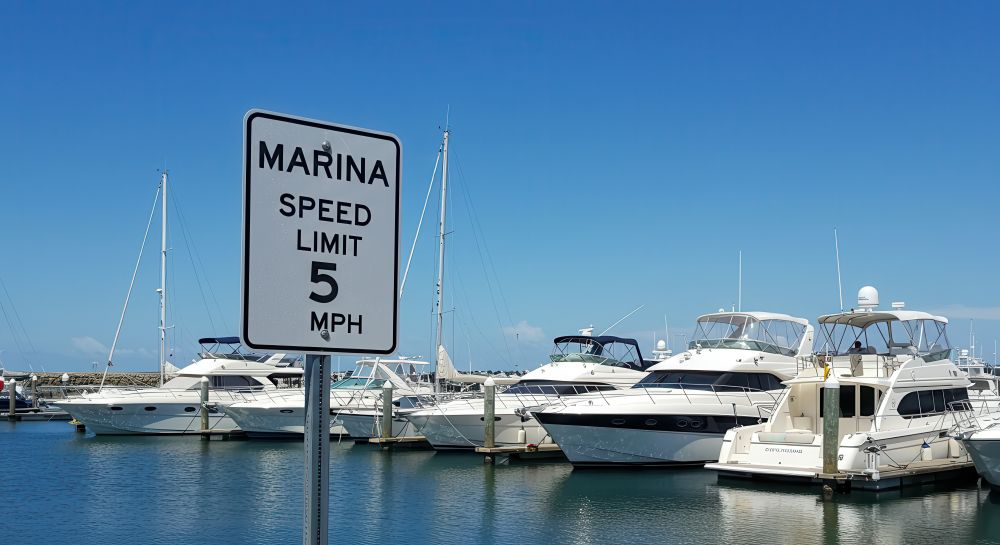
In addition to speed limits, many areas enforce no-wake zones or complete speed restrictions. These may be located near marinas, in environmentally sensitive areas, or on smaller lakes. Signs or buoys typically indicate these zones. Operators are responsible for recognizing and respecting them.
Alcohol and Impairment
Legal Limits and Prohibited Use
Ontario applies the same alcohol laws to boating as it does to driving. The legal blood alcohol limit is 0.08%, with penalties beginning at 0.05%. Operating a boat while impaired is a criminal offence and can lead to fines, license suspensions, and other penalties.
When Alcohol is Permitted
Alcohol may only be consumed on board under specific conditions. The boat must be:
- Equipped with permanent sleeping, cooking, and toilet facilities
- Docked or anchored (not underway)
Environmental Conduct and Boating Etiquette in Ontario
Waste, Fuel, and Wildlife Protection
Boating regulations also cover environmental responsibilities. Boaters must not discharge oil, fuel, sewage, or garbage into Ontario’s waterways. Refueling should be done carefully to prevent spills, and any accidental pollution must be reported.
Operators should also avoid disturbing wildlife and keep engine noise or music to a minimum in quiet areas. Responsible boating supports both environmental protection and community relations.
Courtesy on the Water
Sharing Ontario’s lakes and rivers requires awareness and respect. Powered vessels must yield to non-motorized craft, such as kayaks and paddleboards, and maintain safe distances from swimmers, docks, and anchored boats.
Local and Regional Regulations
Area-Specific Rules
In addition to provincial and federal boating laws, certain lakes and rivers in Ontario may have local restrictions. This is especially true in provincial parks, conservation zones, and Indigenous-managed waters, where rules may differ.
Restrictions can include motor bans, seasonal access limits, noise caps, or vessel size limitations. Boaters are expected to research and comply with these rules before entering unfamiliar waters.
Access to Official Resources
Where to Find Current Information
For accurate and up-to-date information on Ontario boating regulations, boaters should refer to the following sources:
- Transport Canada – Boating Safety
- Ontario Ministry of Transportation
- Approved course providers such as the National Boating Safety School (NBSS)
The National Boating Safety School safe boating course will prepare you to obtain your Pleasure Craft Operator Card
The National Boating Safety School offers a Transport Canada approved boating safety course that will prepare you for the official online boating exam. Once you pass the test, you will be awarded your lifetime Pleasure Craft Operator Card. Register today!
Frequently Asked Questions
1. What happens if I operate a boat in Ontario without a valid boating license?
Operating a powered recreational boat without a valid Pleasure Craft Operator Card (PCOC) can result in fines up to $250. In the event of an accident, you may also face increased legal and insurance consequences.
2. Are there specific boating regulations for renting a boat in Ontario?
Yes. Even when renting, the operator must have a PCOC or complete a rental boat safety checklist provided by the rental company. This checklist is a legal alternative for short-term use only.
3. How are Ontario boating regulations enforced on the water?
Boating regulations are enforced by police, conservation officers, and marine patrols. They may conduct random checks to verify licenses, safety equipment, and compliance with speed or alcohol laws.
Sources
- Government of Canada. Boating safety. Transport Canada https://tc.canada.ca/en/marine-transportation/marine-safety/boating-safety
- Ontario. Ministry of transportation. https://www.ontario.ca/page/ministry-transportation
Related CONTENT
LAtest ARTICLES