
Complete guide to common boating emergencies
Boating is a rewarding and exhilarating activity, but it comes with risks that should never be underestimated. Whether you’re navigating a quiet lake or sailing offshore, emergencies can strike without warning. From mechanical failures to severe weather or medical issues, being prepared is not just recommended, it’s essential.
This guide will walk through the most common boating emergencies, how to prevent them and what steps to take if they occur. With clear boating safety tips, an actionable boat safety checklist and real-world advice, you’ll be better equipped to stay safe on the water.
Key takeaways
- Boating emergencies can involve mechanical failures, fire, medical incidents, man overboard, or harsh weather. Recognizing early warning signs is crucial to avoid escalation.
- Engine failure is one of the most common emergencies; regular maintenance and carrying spare parts and tools can reduce the risk of being stranded.
- In case of man overboard, visual contact must be maintained at all times. Practicing recovery drills improves response time and success rates.
- A marine VHF radio should be tested before each trip. In a life-threatening emergency, use Channel 16 to issue a clear Mayday call with your location and the nature of the situation.
- After an emergency, inspect your boat for damage, document the incident, and report it to the appropriate marine authority if required by law.
- Canadian boaters should refer to Transport Canada’s Safe Boating Guide and follow national regulations regarding mandatory safety equipment and emergency procedures.
Table of contents
- Understanding boating emergencies
- Most common types of boating emergencies
- How to prepare for a boat emergency
- The ultimate boat safety checklist
- Boating safety tips to minimize risk
- What to Do During a Boat Emergency
- After the emergency: reporting and repairs
- Final Thoughts on Boating Emergency Preparedness
- Frequently Asked Questions
Understanding boating emergencies
What is a boat emergency ?
A boat emergency refers to any serious incident at sea or on inland waters that puts your vessel or crew in immediate danger. This can include the boat taking on water, loss of power, fire, collisions or someone falling overboard. These situations demand swift and effective action to prevent injury, loss of property or worse.
It’s important to distinguish between minor inconveniences, like running low on fuel, and real emergencies. Recognizing the difference can help you respond appropriately, contact help when needed and maintain control of the situation.
Most common types of boating emergencies
Boating emergencies vary depending on the vessel, environment and level of preparedness. However, some scenarios are notably more frequent. Understanding these helps you anticipate issues and prevent panic when things go wrong.
Engine failure or mechanical problems
One of the most common emergencies is engine failure. Whether due to fuel issues, electrical faults, or poor maintenance, losing propulsion can leave stranded, especially in strong currents or remote locations.
To mitigate this risk, inspect your engine regularly, carry spare parts and know basic troubleshooting. Always log your fuel levels before departure, and monitor gauges throughout your trip.
Taking on water or sinking
A leak or breach in the hull can escalate quickly. Even small amounts of water can compromise your boat’s stability if left unchecked. Causes may include cracked fittings, worn-out bilge pumps or hull damage.
Every boat should carry an automatic or manual bilge pump and include a high-water alarm system in the boat safety checklist. If your boat starts to take on water, locate the source, alert passengers and use pumps or buckets to remove excess water.
Man overboard situations
Falling overboard, whether due to rough conditions, intoxication or inattention, is one of the most dangerous emergencies. Immediate response is key to avoid drowning or hypothermia.
Designate a spotter, circle back carefully and throw flotation devices as soon as possible. Practicing this maneuver beforehand greatly improves the chance of recovery.
Fire on board
Fire on boats often stem from fuel leaks, electrical shorts or galley equipment. The confined space and flammable materials make this scenario especially hazardous.
Ensure every boat has fire extinguishers rated for marine use, inspect wiring regularly and store flammable liquids safely. If a fire starts, shut off the engine (if safe), alert all passengers and use extinguishers promptly.
Medical emergencies at sea
Medical issues can occur anytime, especially in hot weather, where dehydration, sunstroke or injuries are common. Without quick access to emergency services, you need to be self-reliant.
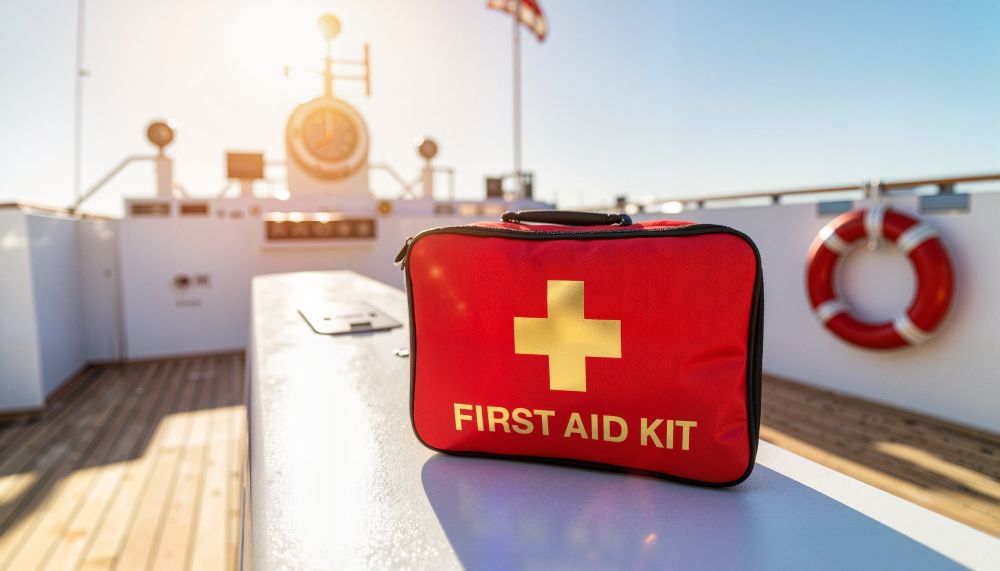
A marine-grade first aid kit should be part of every boat safety checklist and someone onboard should know basic first aid and CPR. For longer trips, consider taking a certified marine first aid course.
Navigational equipment failure
If your GPS or compass fails, especially at night or in poor visibility, you risk running aground or getting lost. While smartphones may help, they shouldn't be your only tool.
Always carry a paper chart of the area, know how to read it and keep a handheld compass as a backup. Regularly check that your primary navigation devices are fully functional before setting out.
Bad weather and rough waters
Weather changes fast at sea. A calm day can quickly turn dangerous with the onset of storms, high winds or large swells. Poor weather remains a top cause of boat emergencies, especially for recreational vessels.
Always check the marine forecast before departure and if the weather turns, reduce speed, secure gear and steer into the waves at an angle to prevent capsizing.
How to prepare for a boat emergency
Being prepared doesn’t just reduce the impact of emergencies, it can prevent them entirely. Knowing what to do, what to carry and how to act under pressure is key to staying safe on the water. This section outlines the core steps every boater should take before, during and after a trip to ensure safety and readiness in any situation.
Conduct safety drills and educate your crew
No one rises to the occasion in an emergency, they fall back on training. That's why it’s crucial to practice emergency procedures regularly. Everyone onboard should know :
- How to use life jackets properly
- What to do if someone falls overboard
- Where the fire extinguishers and first aid kits are
- How to issue a Mayday call via VHF radio
Create a communication plan
In many emergencies, communication can save lives. Your boat should be equipped with at least one reliable communication device, ideally a VHF marine radio with DSC (Digital Selective Calling). If you’re venturing offshore, consider an EPIRB (Emergency Position-Indicating Radio Beacon).
Each passenger should also know how to:
- Use the VHF to call for help (Channel 16)
- Provide your location using GPS
- Report the nature of the emergency clearly and calmly
Follow a pre-departure boat safety checklist
A boat safety checklist is a powerful tool that helps you catch problems before they happen. It ensures your vessel is seaworthy, your safety gear is accessible and your systems are operational. Here’s what a checklist should include :
- Fuel and oil levels
- Functioning bilge pumps
- Working navigation lights and signals
- Enough PFDs for all passengers
- Fire extinguishers and flares
- First aid supplies
The ultimate boat safety checklist
A thorough boat safety checklist is one of the most important tools for preventing emergencies. It allows you to spot potential problems before leaving the dock and ensures your equipment is ready to handle unexpected situations. Skipping safety checks can lead to mechanical failures, legal issues or dangerous conditions at sea.
Rather than rushing through setup, make the checklist part of your boating routine, it’s a habit that could save lives.
Before departure
- Walk around the boat for a full visual inspection
- Check that the engine starts smoothly, with clean oil and proper coolant levels
- Ensure the fuel tank is full and that fuel lines have no cracks or leaks
- Test navigation lights and the horn
- Make sure the battery is fully charged
- Confirm all electrical systems are working properly
- Check that the anchor, dock lines, and fenders are secured but easily accessible
- Test the bilge pump to ensure it’s operational
- Review the latest weather forecast
- Plot your route using both GPS and paper charts
- Notify someone on land of your departure time, destination, and estimated return.
Onboard equipment check
- One properly fitted life jacket (PFD) per person, stored within easy reach
- Marine-rated fire extinguishers, fully charged and placed near the engine and galley
- Functioning visual distress signals (flares) that are not expired
- Waterproof flashlight with fresh batteries
- Fully stocked first aid kit
- VHF radio turned on, tested, and set to Channel 16
- Backup communication tools for longer trips (e.g., handheld VHF, satellite messenger)
- Toolbox with essentials like spare fuses, duct tape, wrenches, and screwdrivers
Passengers safety and briefing
- Show passengers where safety gear is stored and how to use it
- Identify emergency exits and explain how to operate the VHF radio
Assign emergency roles (e.g., who retrieves flotation devices, who contacts help) - Remind passengers to stay calm and follow instructions in case of an emergency
Boating safety tips to minimize risk
Even with all the right equipment onboard, your mindset and behavior on the water play a huge role in keeping everyone safe. Emergencies often happen not because someone makes a poor decision or overlooks a small warning sign.
These boating safety tips are based on common real-world incidents and Coast Guard recommendations. Applying them consistently helps you prevent many problems before they begin and makes you a more responsible and confident boater.
Know your boat and its limits
Every boat handles differently. Some are built for speed, others for stability. Understanding your vessel’s capabilities, including its maximum capacity, handling in waves and turning radius, prevents you from pushing it too far.
Never overload your boat. Check the capacity plate and respect limits on weight and passenger count. Overloading is one of the leading causes of capsizing in small vessels.
Stay sober and alert
Operating a boat under the influence of alcohol or drugs is not only illegal, it’s extremely dangerous. Unlike on land, waves, sun exposure and fatigue already affect your balance and reaction time. Adding alcohol to the mix multiplies those risks.
Designate a sober skipper, especially if you’re hosting guests who will be drinking. It’s a simple step that drastically reduces accident potential.
Keep a constant watch
Situational awareness is key. Scan the water ahead regularly, watch for other vessels, floating debris, and changes in wind or wave patterns. Don’t rely solely on radar or GPS, your eyes are your best navigation tool.
If you're boating in crowded or unfamiliar waters, reduce speed and keep your hand on the throttle. Give right of way when in doubt, and always signal your intentions clearly.
Wear life jackets at all times
This tip is repeated often—for good reason. Most boating fatalities happen to people who weren’t wearing life jackets. They may have had one onboard, but not on their body when it mattered.
Make it a habit: everyone wears a life jacket, especially children and non-swimmers. Modern PFDs are lightweight, comfortable, and designed for all kinds of boating activities.
Check the weather and then check again
Weather is one of the most unpredictable variables on the water. A storm can roll in faster than expected, turning calm waters into dangerous swells. Even small changes in wind or tide can affect your route.
Always check the marine forecast before heading out. Use a weather app or onboard radio to stay updated during your trip. If you’re unsure, err on the side of caution and postpone the outing.
Stay trained and keep learning
No matter how experienced you are, there’s always something more to learn. Take a certified boating safety course if you haven’t already, and encourage your passengers to do the same. Many national authorities and coast guards offer free or low-cost programs.
Boating isn’t just about operating a vessel, it’s about building habits that prioritize safety without killing the fun.
What to Do During a Boat Emergency
Even with the best preparation, a boat emergency can still occur. What matters most in these moments is how you respond. Staying calm, following a clear plan, and knowing your priorities can turn a potentially deadly situation into a manageable one.
In this section, we’ll look at general principles that apply to most emergencies, as well as specific actions depending on the type of incident.
Stay Calm and Take Control
The first and most critical step is to remain calm. Panic spreads quickly among passengers and can worsen the situation. As the skipper or responsible boater, your ability to stay composed sets the tone.
Take a deep breath. Assess the scene. Identify the immediate danger—whether it’s fire, flooding, or someone overboard—and act accordingly. Your goal is to stabilize the situation and protect lives before anything else.
Alert everyone onboard
As soon as a boat emergency arises, inform all passengers. Let them know what’s happening, what they should do, and where to go. For example:
- If the boat is taking on water, get everyone into life jackets and assign tasks (pumping water, calling for help).
- If someone falls overboard, point to their location and keep eyes on them while preparing for recovery.
- In case of fire, shut off the engine (if safe), and prepare to abandon the boat if the fire spreads.
Use your communication devices
Now is the time to use your VHF marine radio or any backup devices. Channel 16 is the emergency and hailing frequency monitored by the Coast Guard and nearby vessels.
If the situation is life-threatening, issue a Mayday call. Speak clearly and provide the following:
- "Mayday, Mayday, Mayday"
- Your boat name and position (GPS if possible)
- Nature of the emergency (e.g., fire onboard, taking on water)
- Number of people onboard
- Type of assistance needed
Stabilize the situation
Once help is on the way (or if you're far from assistance), take action to stabilize the situation:
- Taking on water? Use the bilge pump or buckets to remove water. Try to locate and patch the source.
- Engine failure? Drop anchor if you’re drifting toward danger. Signal your position and prepare for towing.
- Man overboard? Turn the boat carefully, throw flotation devices, and keep constant visual contact.
- Medical issue? Move the injured person to a safe area, provide first aid, and keep them warm and calm.
Keep the crew focused
Assign small, manageable tasks to passengers to keep them calm and engaged, especially children or inexperienced boaters. This could be as simple as holding the first aid kit, using a flashlight, or monitoring the radio.
A distracted or frozen crew is a liability. A coordinated crew becomes an asset in any boat emergency.
After the emergency: reporting and repairs
Once the immediate danger has passed, your responsibility isn't over. How you handle the aftermath of a boat emergency affects both future safety and legal obligations.
Report the incident
If the emergency involved injury, significant damage, or required outside assistance (e.g., Coast Guard, towing), you may be legally required to report it.
- In the U.S. and Canada, incidents must be reported to the appropriate boating authority, often within 48 hours.
- Document key details: what happened, where, when, who was involved, and how it was resolved.
Inspect and repair the vessel
Before using your boat again, inspect it thoroughly:
- Check for hull damage, electrical faults, and steering or engine issues.
- Test all safety gear, replace anything used or damaged (e.g., flares, fire extinguishers).
- If you're unsure about the condition of the vessel, have it examined by a marine technician.
Debrief and Learn
After a serious event, take a moment to review what worked and what didn’t:
- Were your boating safety tips applied effectively?
- Did everyone know how to use the equipment?
- Was the boat safety checklist followed beforehand?
Final Thoughts on Boating Emergency Preparedness
Boating is meant to be enjoyable but with enjoyment comes responsibility. Emergencies at sea can escalate quickly, but the good news is that most are preventable with the right habits, equipment, and mindset.
By applying consistent boating safety tips, following a reliable boat safety checklist, and knowing how to act during a boat emergency, you dramatically reduce risks for yourself and your passengers.
Preparedness isn’t about expecting the worst, it’s about being ready to handle it if it comes. Safe boating starts before you even leave the dock.
The National Boating Safety School safe boating course will prepare you to obtain your Pleasure Craft Operator Card
The National Boating Safety School offers a Transport Canada approved boating safety course that will prepare you for the official online boating exam. Once you pass the test, you will be awarded your lifetime Pleasure Craft Operator Card. Register today!
Frequently Asked Questions
1. What should be in a boat emergency kit?
Your emergency kit should include marine-rated first aid supplies, flares, a waterproof flashlight, a whistle, fire extinguishers, and backup communication tools like a handheld VHF radio or an EPIRB.
2. Who do you call in a boating emergency?
Use your VHF radio on Channel 16 to contact the Coast Guard or nearby vessels. If you're within cell range, you can also call local marine rescue services or 911, depending on your location.
3. What’s the difference between a distress call and a regular radio call?
A distress call (like a “Mayday”) is used only for life-threatening emergencies. Routine communication should be done on non-emergency channels to keep Channel 16 clear for real emergencies.
Sources
- Government of Canada. Transport Canada, Boating safety. https://tc.canada.ca/en/marine-transportation/marine-safety/boating-safety
- Government of Canada. Transport Canada, Chapter 5 Be ready for emergencies. https://tc.canada.ca/en/marine-transportation/marine-safety/chapter-5-be-ready-emergencies
- Canadian Safe Boating Council, CSBC Key messages, https://csbc.ca/csbc-key-messages/
Related CONTENT
LAtest ARTICLES