Buoyant Heaving Line Rules in Canada
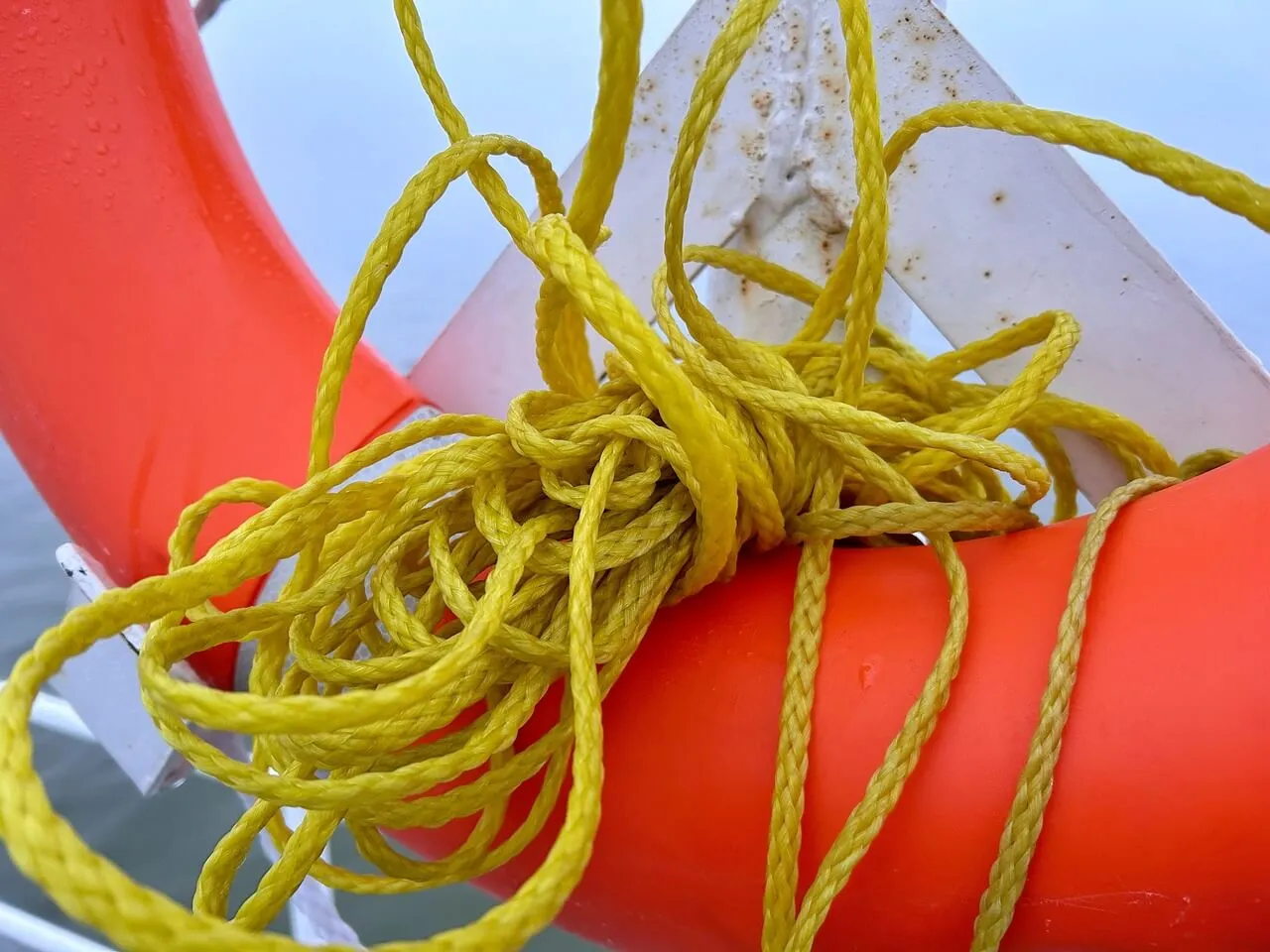
A buoyant heaving line is a rope made of buoyant material designed to float on water. It is used to help a person who has fallen overboard. It is a required piece of boating safety equipment in Canada.
Key takeaways
- A buoyant heaving line is a floating rope that can be used in emergencies to rescue a person who has fallen overboard.
- Canadian law stipulates that all pleasure craft must have a buoyant heaving line on board that is in good condition, a single piece of rope, fully buoyant and at least 15 metres long.
Table of contents
What is a Buoyant Heaving Line?
A buoyant heaving line is basically a rope that will float. When you toss it into the water, it won’t sink. A weighted floating device, like a float or ring, is attached to the end of the rope so that it is easier to throw. This also makes the end of the rope easier to see for the person in the water. Someone who has fallen overboard or needs rescuing can grab the rope, hang on, and be pulled toward the boat.
Legal requirements for buoyant heaving lines
Buoyant heaving lines are part of the required safety equipment on a boat. All pleasure craft in Canada, regardless of size or type, must be equipped with a buoyant heaving line.
In order for a floating heaving line to comply with Transport Canada’s Marine Safety Regulations, it must meet several conditions:
- The line must be in good, serviceable condition.
- The line must float.
- The line cannot consist of multiple lines tied together. Knots weaken the line, can snag, and can make it difficult to throw accurately.
- The line must be a minimum of 15 metres (50 feet) long, and longer for larger boats. The length is crucial for reaching a person in the water from a safe distance.
- It must be accessible at all times in case of emergency. Never stow it in a locker where it would take precious time to retrieve.
Boat operators are responsible for telling passengers where the heaving line is located so they are prepared in case of an emergency.
Throwing a buoyant heaving line: step-by-step guide
- Make sure that one end of the line is tied securely to the boat (not to a person).
- Make sure the weighted floating device is secured at the other end of the rope.
- Remove the equivalent of one meter (3 feet) of line.
- Hold the line in one hand and the floating device in the other.
- Warn the person in the water that they will be receiving the rope.
- Aim a few meters beyond the person in the water.
- Throw the floating device from below while letting the rope unwind with your other hand.
Types of buoyant heaving lines
There are several types of buoyant heaving lines, which are more or less suited to specific boats and situations.
They can be made from various materials like nylon, polypropylene, or even leather. They often come with a rescue throw bag to prevent tangles and allow for easy deployment. Some have hooks or loops for attaching to drift anchors or other equipment. They are usually braided and some are brightly coloured so they are easier to spot once thrown.
The National Boating Safety School safe boating course will prepare you to obtain your Pleasure Craft Operator Card
The National Boating Safety School offers a Transport Canada approved boating safety course that will prepare you for the official online boating exam. Once you pass the test, you will be awarded your lifetime Pleasure Craft Operator Card. Register today!
Frequently Asked Questions
1. What is the purpose of a buoyant heaving line?
The primary purpose is to rescue a person who has fallen overboard. It's a floating rope that can be thrown to someone in the water, allowing them to grab onto it and be pulled to safety.
2. Can I use a rope I already have on my boat?
You can, but only if it meets all the legal requirements. It must float, be in good condition, be at least 15 meters long, and be a single, unbroken length. It must also have a buoyant mass attached to one end. Using a standard, non-floating rope is not acceptable.
3. Where should I store the buoyant heaving line?
It must be stored in a location that is easily and quickly accessible in an emergency. This means not in a locked compartment, deep in a storage locker, or buried under other gear. Many boaters keep it coiled and mounted near the helm or in an open cockpit area.
4. Why do I need to practice using my buoyant heaving line?
It can be surprisingly difficult to throw accurately in a real-life emergency situation, especially with wind and waves. Practicing will help you to be more effective if you ever need to use it.
Sources
- Transport Canada. Chapter 5 - Be ready for emergencies. Marine Transportation. https://tc.canada.ca/en/marine-transportation/marine-safety/chapter-5-be-ready-emergencies
Related CONTENT
LAtest ARTICLES