
The Boater's Guide to Anchor Designs
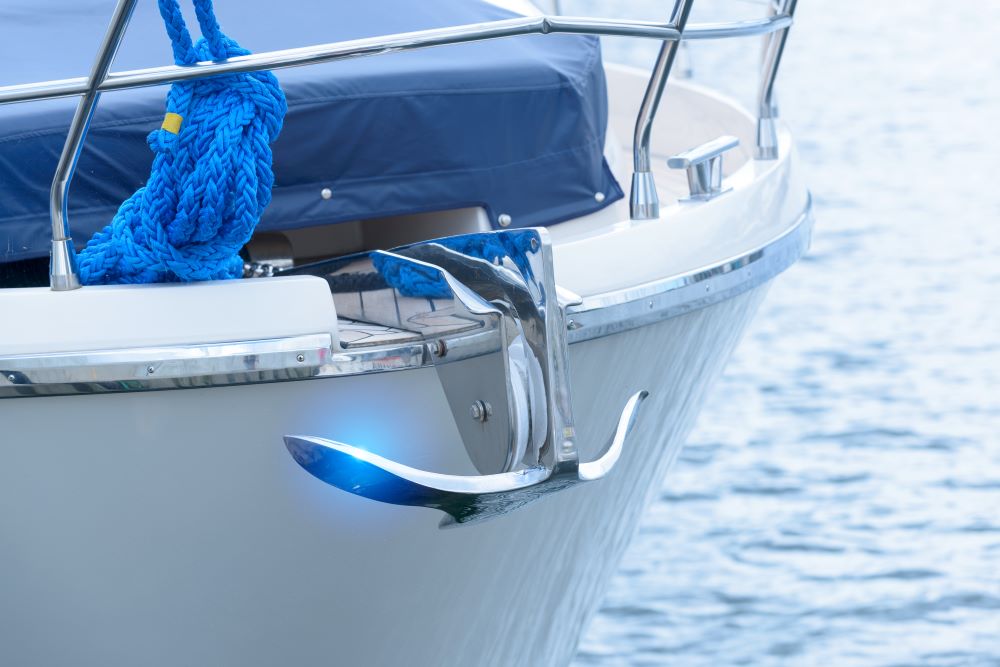
The anchor is a foundational piece of boating safety equipment, used to stabilize your vessel during planned stops, emergencies and overnight mooring.
Choosing the right type of anchor for recreational boating means understanding the various designs, weights and use cases of different anchors.
Key takeaways
- There are five main types of anchors that are most often used by recreational boaters in Canada: Danforth (Fluke), Plow, Claw, Grapnel and Mushroom.
- Choosing the right design and weight of anchor depends on your boat size, the area where you are boating (type of bottom) and your chosen activity.
Table of contents
The Five Main Types of Boat Anchors: Danforth, Plow, Claw, Grapnel, and Mushroom
Different types of anchors are designed to provide a good hold on different types of bottoms, particularly in challenging conditions like strong winds or moving water.
Knowing the mechanics of each design will help you understand how they keep your boat safe and stable, and help you choose the right type for your boat and location.
1. Danforth Anchor (Fluke Anchor)
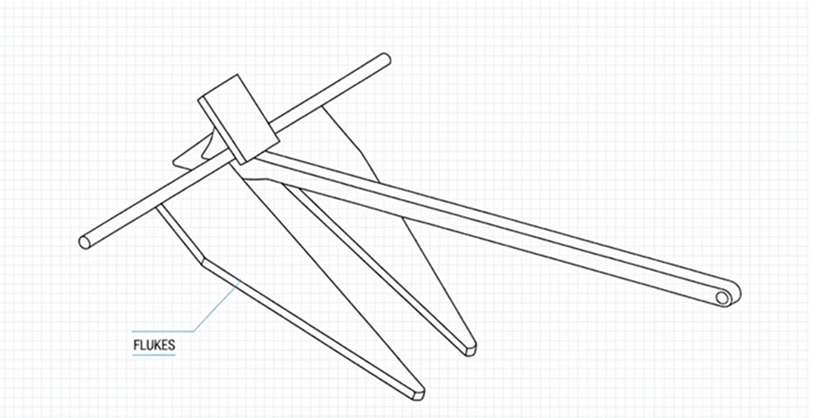
The Danforth anchor is highly recognizable and often used as a primary or kedge anchor.
This design features a double plate with two large, hinged flukes that pivot from the stock. A small plate is strategically weighted to ensure the anchor enters the seabed at an ideal, deep-digging angle.
Best use case
It is designed for maximum efficiency on soft bottoms, in particular, sandy and muddy beds, where the large surface area of the flukes can penetrate deeply and generate powerful resistance.
Not recommended for . . .
It is not effective on hard, rocky, or heavily algae-covered bottoms, where its flukes may skip or fail to set.
2. Plow Anchor (CQR or Delta anchor)
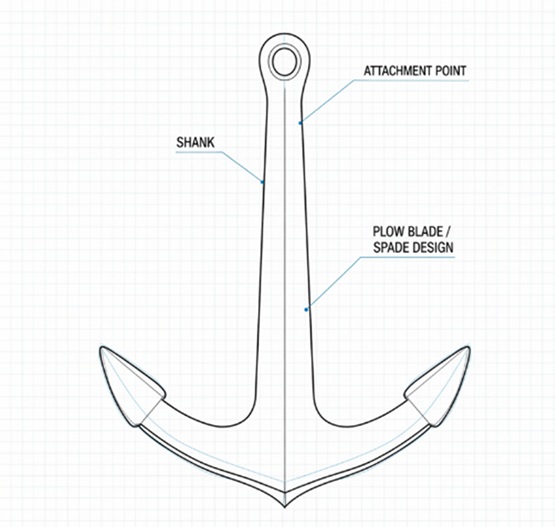
The Plow anchor is known for its versatility and is extremely popular among boaters globally.
As the name suggest, the design of a plow anchor is inspired by an agricultural plow, featuring a sharp tip and a single, fixed or hinged shank. This structure allows it to cut into the seabed. Its most significant benefit is its ability to replant easily after a temporary stall or drag, which is a common occurrence in changing winds or currents.
Best use case
This type of anchor is a reliable all-around performer for most water beds, in particular for larger boats that have space to store the anchor and the power to handle a larger, heavier anchor.
Not recommended for . . .
Plow anchors tend to be heavier and bulkier than other anchor types, making them more difficult to handle manually and challenging to store on very small boats with limited deck or anchor locker space. They also do not necessarily perform as well as some more modern anchor types.
3. Claw Anchor (Bruce Anchor)
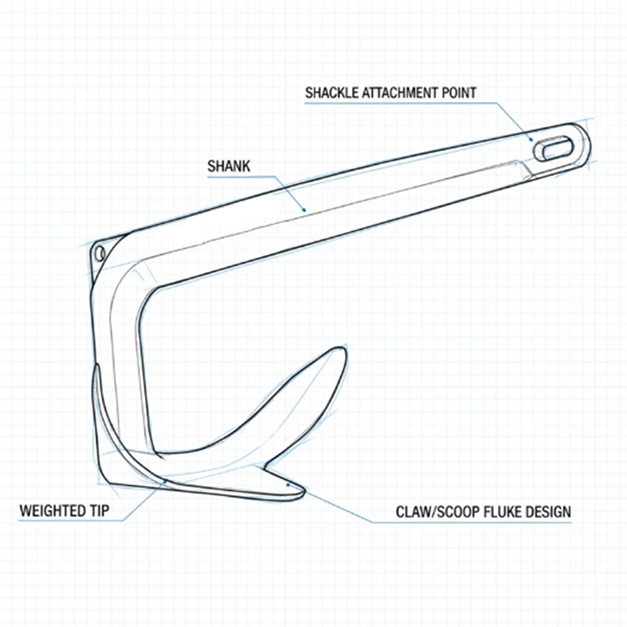
The Claw anchor is widely considered one of the most effective and reliable anchoring devices available. Its design features a scoop or three-pronged claw, and has a heavily weighted tip.
Best use case
The weighted design helps the anchor sink quickly and reach the bottom of the bed. It provides excellent, consistent holding capacity across nearly all types of bottoms, including sand, mud, and light rock. It is a top choice for safety and performance.
Not recommended for . . .
Recreational boaters with small vessels and who plan to anchor in relatively calm, safe conditions may prefer a less expensive type of anchor.
4. Grapnel Anchor
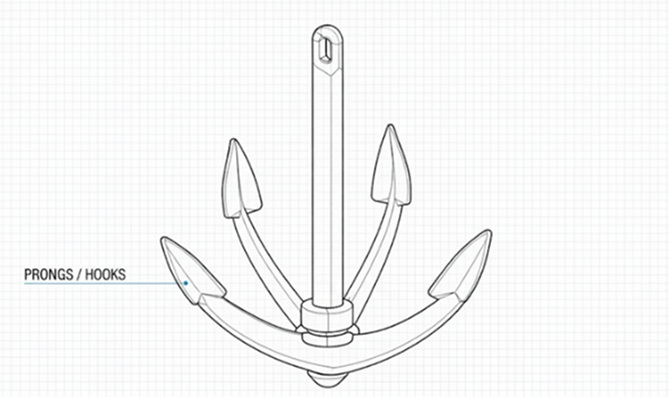
The Grapnel is one of the simplest and most traditional types of anchors. It has a simple design, featuring four or more rigid prongs.
Best use case
A Grapnel anchor can be used and planted in nearly any position on the lakebed or seabed. It works well on rocky or coral bottoms, where its prongs can hook onto terrain features. It’s often used for smaller boats or temporary mooring.
Not recommended for . . .
A major drawback is its tendency to get stuck easily in rocks or debris. This makes it less suited to any situation where it may be necessary to pull up quickly. Boaters should be familiar with advanced retrieval techniques before using a Grapnal anchor.
5. Mushroom Anchor
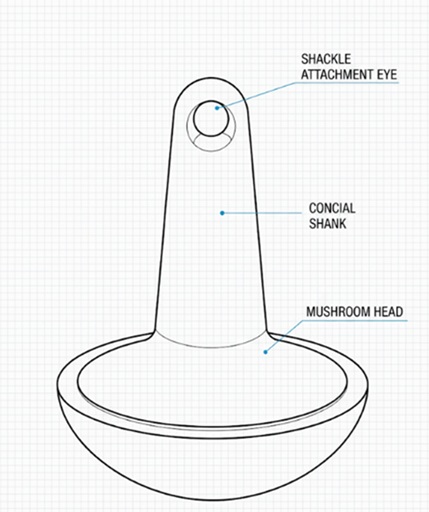
The Mushroom anchor design features a dome- or mushroom-shaped head and a weighted shaft. It relies on its weight and a suction effect for holding.
Best use case
A Mushroom anchor is best used for in bottoms made of soft, deep mud or silt.
Not recommended for...
Mushroom anchors are not recommended for hard or rocky bottoms, sand, or strong currents, as they will simply drag along the surface.
Choosing the right anchor weight according to boat size
Anchor sizing depends on the boat length and weight (displacement). Manufacturers provide weight recommendations (e.g., 10-pound anchor for a 20-foot boat). Always err on the side of going one size larger than the minimum recommendation, especially if you plan to anchor overnight or in exposed areas.
Table showing the weight of the main anchor and the jet anchor to use according to the size of the boat :
| Length of pleasure craft | Weight of main anchor (kg) | Weight of kedge anchor (kg) |
| 9 m and under | 15 | 8 |
| 10 m | 17 | 9 |
| 11 m | 20 | 10 |
| 12 m | 23 | 12 |
| 13 m | 26 | 13 |
| 14 m | 30 | 15 |
| 15 m | 24 | 17 |
| 16 m | 28 | 19 |
| 17 m | 44 | 22 |
| 18 m | 50 | 25 |
| 19 m | 56 | 28 |
| 20 m | 62 | 31 |
| 21 m | 39 | 35 |
| 22 m | 76 | 38 |
| 23 m | 83 | 42 |
| 24 m and over | 90 | 45 |
When to use your anchor
Anchors are commonly used in the following circumstances:
- Temporary mooring/lunch stops: Dropping anchor for a short period to swim, eat, fish, or relax in a scenic area.
- Overnight/extended anchoring: Securing the boat for the night or for a multi-day stay, especially when a slip at a marina is unavailable or unnecessary.
- Fishing: Holding position directly over a fishing spot or in a current to keep the boat stable while angling.
- Waiting for a bridge or lock: Temporarily holding position outside of a high-traffic area to await an opening or channel.
- Diving or snorkeling: Marking and securing the boat over a dive site, reef, or wreck.
- Emergency situations: Setting an anchor immediately to prevent drifting if the engine fails, especially near hazards, shoals, or busy channels.
- Kedge/warping: Using an anchor to pull a boat off a grounding or reposition it in a difficult situation.
Anchor line and safety
Regardless of the type of anchor you choose, it's vital to ensure you use a high-quality line with an appropriate ring size for your mooring situation. Always confirm your boat is perfectly anchored before leaving it, and remain alert for any signs of anchor slippage.
The National Boating Safety School safe boating course will prepare you to obtain your Pleasure Craft Operator Card
The National Boating Safety School offers a Transport Canada approved boating safety course that will prepare you for the official online boating exam. Once you pass the test, you will be awarded your lifetime Pleasure Craft Operator Card. Register today!
Frequently Asked Questions
1. Do you need to use an anchor on a lake?
Lake boating is generally calmer than boating on the ocean (depending on the lake) but you still need to use an anchor to secure your boat for diving activities, rest stops, overnight mooring, and some emergencies. Choose an anchor type that works well on the lakebeds, which are typically softer than offshore areas.
2. Which type of anchor is best for my boat?
There is no single "best" anchor. The ideal choice depends on the type of lake, river or seabed where you are boating, and the size of your boat.
3. Should I buy a second anchor?
Yes, it is highly recommended to carry a secondary anchor. This is usually a smaller, lighter anchor (sometimes of a different style) for quick stops or an emergency backup. Some boaters carry a small Danforth as a primary and a Claw as a secondary, or vice-versa.
Sources
- Anchor. (n.d.). In Wikipedia. Retrieved October 6, 2025, from https://en.wikipedia.org/wiki/Anchor
Related CONTENT
LAtest ARTICLES