
What is a Transom on a Boat?
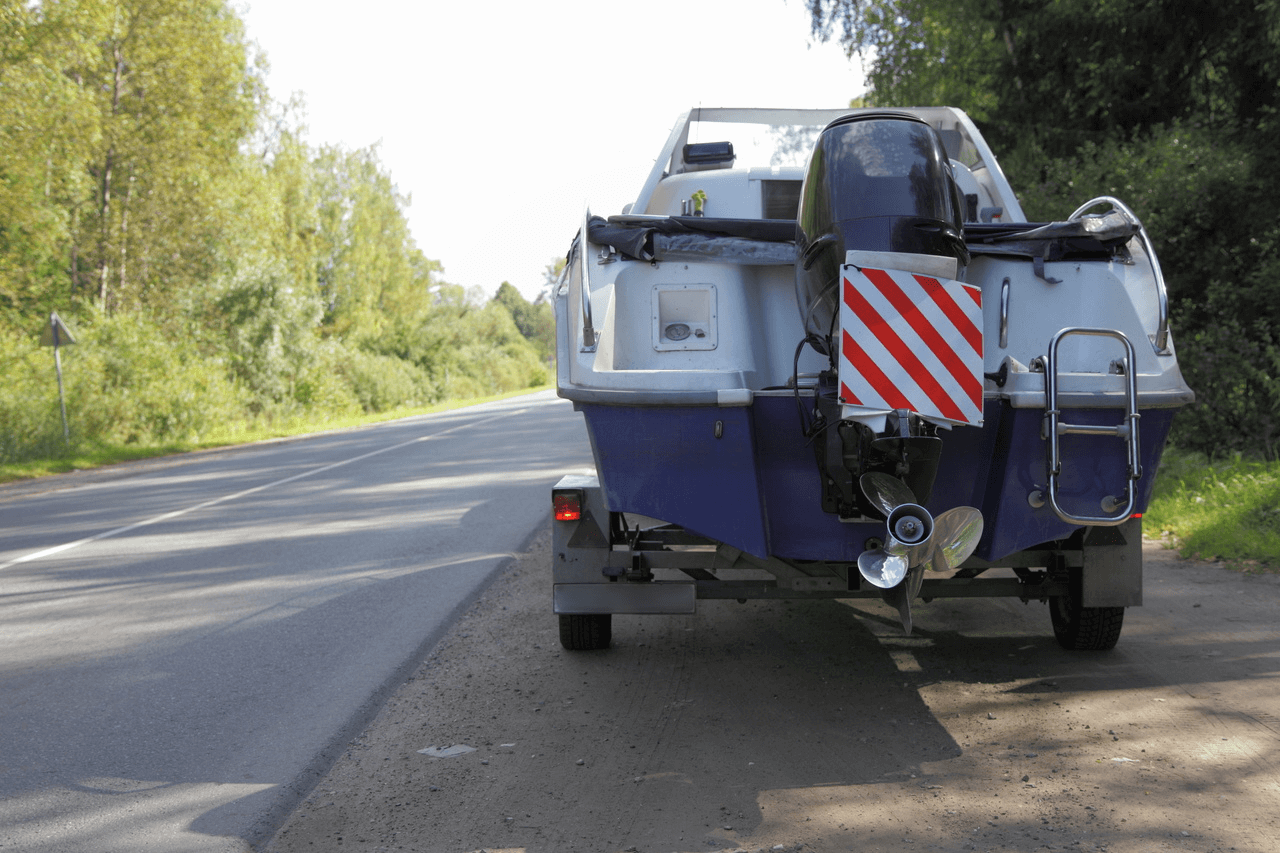
The transom is the thick, flat area at the stern of modern boats. Its size and shape will vary according to the type of boat. Transoms can be square, round, large, small, etc.
Key takeaways
- A boat’s transom is found at the rear, or stern, of a boat.
- The transom can be used to attach an outboard motor, emergency ladder or reboarding device. It is where the HIN must be displayed (and sometimes the boat name). It can also accommodate drain plugs and trim or tilt sensors.
- Proper care of the transom is necessary to avoid problems like rot and cracks, which could compromise the vessel’s safety.
Table of contents
What is the transom for?
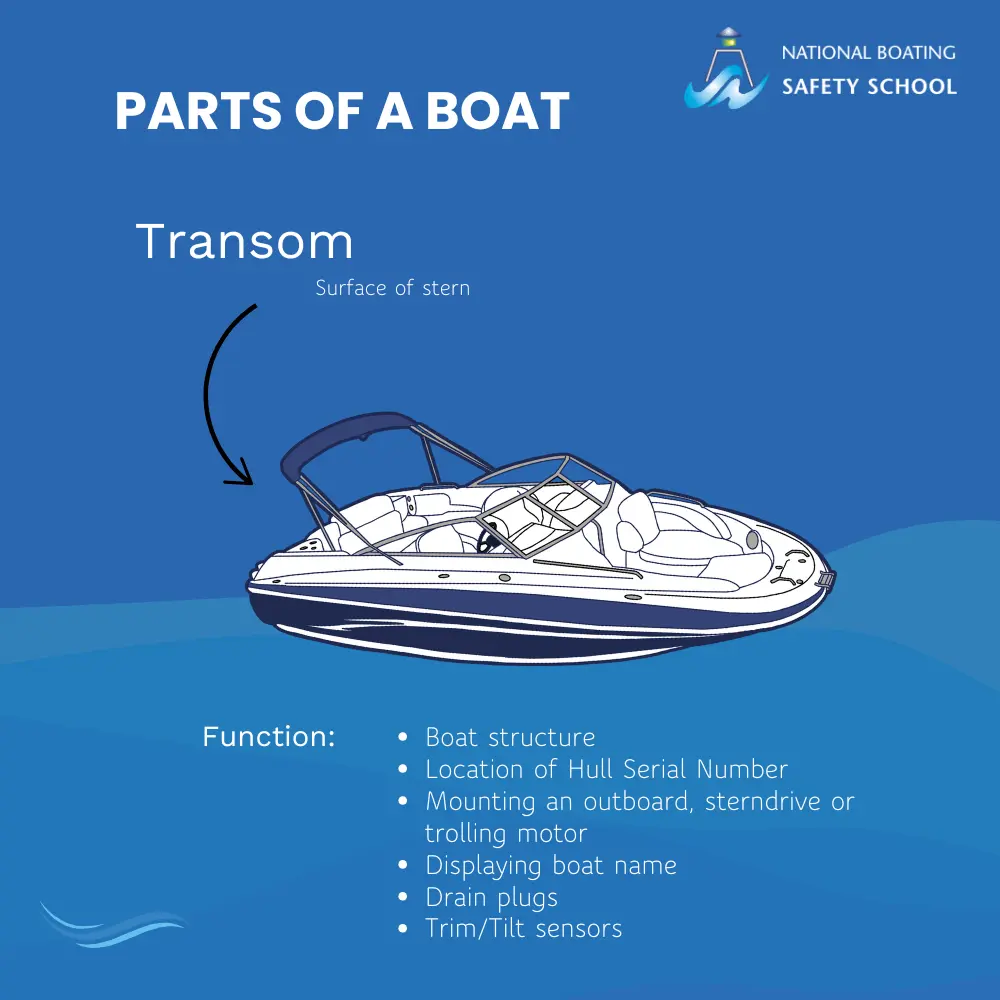
The transom serves several purposes:
Boat structure
It supports the structure of your boat and strengthens the stern and aft sections.
Hull Serial Number (HIN)
The hull serial number must be permanently marked on the transom.
Mounting the motor
The transom provides the mounting point for an outboard motor, trolling motor or stern-drive unit. A motor can be attached to the transom in different ways, either so that they remain in the water permanently, or in such a way that they can be mechanically lifted out of the water as needed.
Emergency ladders and swim platforms
The transom is often the place where boaters will attach swim platforms and reboarding devices like folding or telescoping ladders.
Boat name
Many boat owners choose to put the name of their vessel on the transom, since it usually rests above the water line and is easily visible.
Remember you can always confirm that your boat, including the transom, is up to standard by scheduling a free Pleasure Craft Courtesy Check.
Drain plugs
Plugs located at the lowest point of the transom allow water to drain from the bilge when the boat is out of the water.
Trim/Tilt sensors
You can also attach trim sensors to the transom, to obtain an electronic readout of the motor's trim position. Trim tabs can also be attached here, to make adjustments to the boat’s trim.
What is the transom made of?
Today, many boat transoms are made of aluminum or reinforced fibreglass, a material that is resistant to degradation when exposed to saltwater and other elements.
A wooden sailboat may have a transom made out of wood. In general m the transom is made out of the same material as a boat’s hull. To confirm that your boat has been constructed using appropriate materials, refer to your vessel’s compliance notice.
Modern transoms are strong and can support the weight of engines and fixtures, and also of people who lean on this part of the boat when doing repairs. When underway, they absorb a lot of force from the boat engine, especially on powerboats, where a large portion of the force is transmitted through the transom to the hull.
The National Boating Safety School safe boating course will prepare you to obtain your Pleasure Craft Operator Card
The National Boating Safety School offers a Transport Canada approved boating safety course that will prepare you for the official online boating exam. Once you pass the test, you will be awarded your lifetime Pleasure Craft Operator Card. Register today!
Frequently Asked Questions
1. What’s the difference between the stern and the transom?
You may hear some boaters use the terms ‘stern’ and ‘transom’ interchangeably. However the transom is only part of the stern.
2. What should I do if my transom is cracked?
A cracked transom is usually the result of a manufacturing defect or too much kinetic stress. If you notice a crack, you should have it repaired immediately, as a weak transom poses a danger to the structure of a powerboat, sailboat, or any other type of recreational vessel.
3. What is transom core rot, and how do I check for it?
Core rot is the most common and serious transom problem on older fiberglass boats. Rot occurs when water enters the core through fastener holes (like those for the motor or trim tabs) that haven't been properly sealed. You can check for it by tapping the transom with a rubber mallet; a dull, soft sound where there should be a sharp, solid "thud" indicates a problem. You can also look for stress cracks around the motor mount bolts.
4. Can I put a bigger motor on my boat?
You should never exceed the maximum horsepower rating stamped on the boat's capacity plate. Exceeding this limit is unsafe, voids insurance, and places undue stress on the transom structure, leading to stress cracks and failure.
5. What is the difference between a full transom and a notched transom?
A full transom goes all the way across the stern, completely enclosing the boat and often featuring a bracket or "engine well" to mount the engine. This design offers maximum protection against waves coming over the back.
A notched transom has a cut-out or "notch" in the center to accommodate the engine mount, allowing for a lower engine placement but making the cockpit slightly more vulnerable to waves.
6. What is a jack plate?
A jack plate is a device mounted between the outboard motor and the transom that allows the operator to vertically adjust the motor's height while underway. This helps optimize performance, speed, and fuel efficiency by lifting the propeller to the ideal height for different water conditions.
7. Can I install an underwater light on my transom?
Yes, but be careful! Any time you drill a hole in the transom below the waterline, it must be sealed meticulously with a marine sealant (like 3M 5200).
Sources
- Transport Canada. SAFE BOATING GUIDE. . https://tc.canada.ca/sites/default/files/2024-03/tp_511e.pdf
Related CONTENT
LAtest ARTICLES