
Boat Maintenance Guide for Canadian Boaters
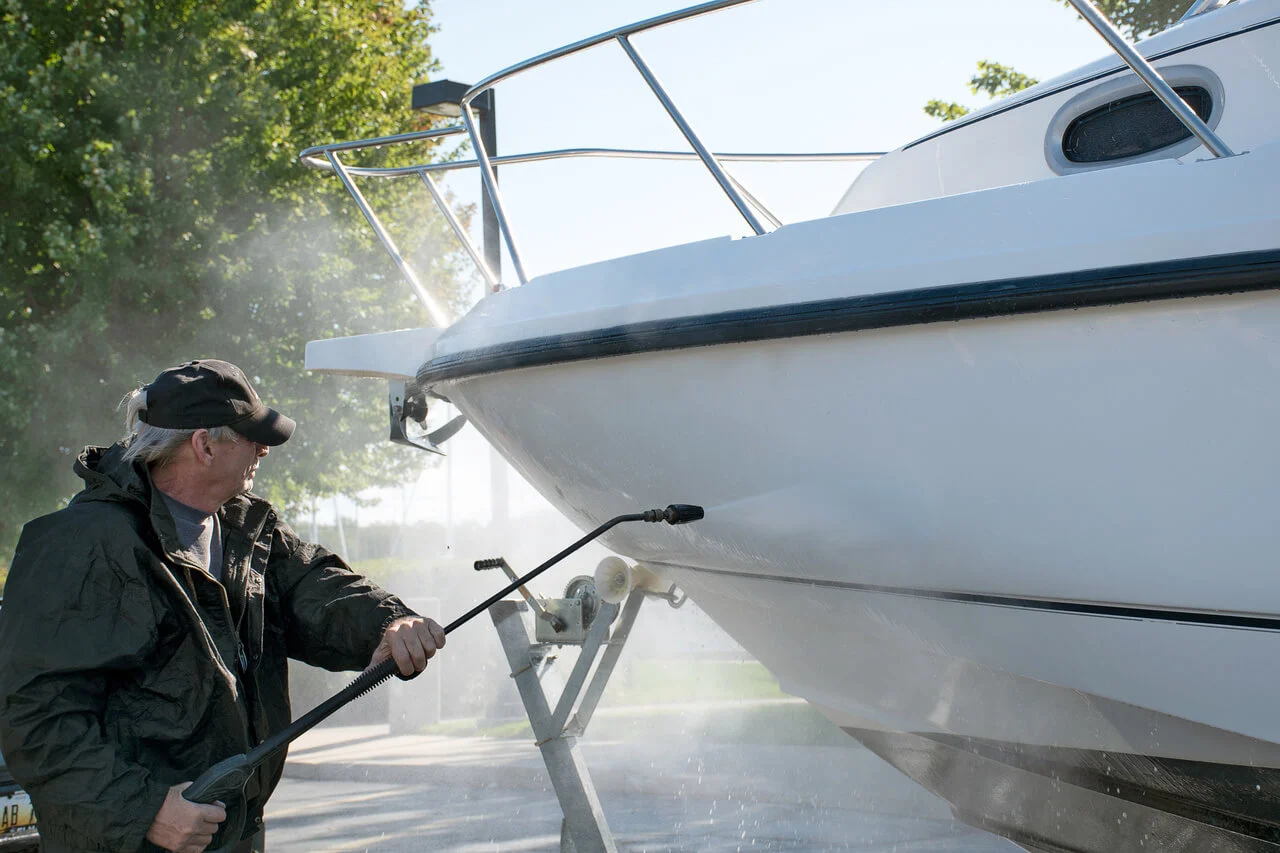
Maintaining a recreational boat in Canada involves regular checks, cleaning, and repairs. A well-maintained boat is essential for safe boating and to comply with Canadian regulations.
Key takeaways
- You need to maintain your boat and all related safety equipment to meet Canadian boating safety regulations.
- Regular boat maintenance involves caring for the hull, canvas, safety equipment and propulsion system.
- Different levels of boat maintenance must be done year-round: at the beginning of the season, before every trip, after every trip and at the end of the season (which often involves winterizing your vessel).
Table of contents
Hull maintenance: caring for your boat’s structure
You should wash with soap and water and consider polishing and waxing for protection. Regularly check your hull for cracks, damage, and leaks. Immediately make any necessary repairs before going out on the water again.
Regular hull cleaning helps prevent mildew and erosion and can even save you fuel by minimizing your drag. It also helps prevent the spread of invasive species, which is an element of boating pollution law you should be familiar with in Canada.
Repairing the hull
Hull repairs can be done by boaters or by professionals, depending on the severity of the damage.
Repairing a fibreglass hull
Smaller cracks on a fibreglass boat hull can be repaired using gelcoat or a resin.
Gelcoat has resistant and mechanical properties. It hardens in contact with air about 1-2 hours after its application. You can use it to fill cracks and solidify the hull structure. Clean and prepare the cracks, then follow the instructions on the label to apply the product. Refinish the surface as needed.
A polyester resin is best for repairing hull defects that are above the waterline. Apply the polyester filler, let it dry, then apply a varnish.
Epoxy resin can be used when the damage is below the waterline. Epoxy is more water resistant than polyester resin. Epoxy resin requires a catalyst to harden, so it requires a bit more skill to apply. You will need all necessary equipment at hand to carry out the repair. To avoid health risks, apply the mixture in an open, ventilated area and read the instructions on the label carefully. Wear gloves, goggles, and a face mask.
Repairing a plastic hull
Unlike fiberglass boat hulls, plastic hulls can be repaired using polyethylene sticks, as polyethylene is derived from plastic. You will need to heat the stick and spread the application with a knife or metal spatula.
Repairing an aluminum hull
It is possible to repair an aluminum boat hull with few materials, but some professional experience may be required. Depending on where the damage on the hull is, you could place an aluminum sheet over the crack and weld the parts to make the repairs. This is a job that is usually best done by a professional welder. Sandblasting can remove dents and small scratches. This technique uses pressurized air and an abrasive sand to remove the imperfections. Epoxy resin can also be used on aluminum hulls, to fill cracks and make the hull stronger.
Repairing a wooden hull
Over time, wood tends to rot or mold. When scratches and cracks develop on a wooden boat hull, the waterproofing layer has been damaged and needs to be reapplied.
This involves burning the area on the hull to be repaired to remove paint residue and harmful mildew, then filling the scratches or cracks as above.
Maintaining your canvas and other surfaces
Canvas refers to all the types of fabrics commonly found on boats. Canvas and upholstered seating should be washed regularly to prevent mildew.
Other surfaces like glass windows, the deck and equipment interfaces should also be kept clean for top performance.
Maintaining your boating safety equipment
Canadian law stipulates you must have the right safety equipment on board at all times, and this equipment must be in good working condition.
- Navigation lights: Check that all navigation lights are working and replace bulbs as needed.
- Flotation devices, life jackets and PFDs: Approved, correctly-sized and well-maintained life jackets and PFDs are essential safety equipment. Make sure you take care of your life jackets by storing them correctly and only using them as intended. Check that they work every time you go out on the water. Buoyant heaving lines and other reboarding devices must be in good working condition.
- Emergency tools: Verify that your flares, first-aid kit, and distress signalling equipment are all in good working order. Inspect and replace fire extinguishers regularly and replace them as needed, to be sure they are up to standard.
- Lights and reflectors: Make sure that your navigation lights are functioning properly and that your reflectors are in good condition.
- Boat documentation: Make sure that you have your boat licence and registration with you, that your Hull Identification Number is visible and applied correctly, and that your vessel has an up-to-date compliance notice. Carry your proof of competency with you at all times.
- Pumps: Check your manual water pump or bilge pump to be sure that it works and is free of debris. Check your draining plug while you’re at it.
- Clean lines: Remove dirt and sand from ropes and lines to prevent deterioration.
Maintaining your boat propulsion system: engines need lots of attention
It’s a good idea to thoroughly check your boat’s engine system at least once a year.
- Inspect hoses and lines: Look for leaks, cracks, and secure connections.
- Change oil and filters: Regularly change engine oil and filters as recommended by the manufacturer.
- Inspect flame arrestor: Clean or replace the flame arrestor to allow for proper airflow.
- Clean your fuel tank.
- Check fuel and oil, and top up as needed.
- Check the battery.
- Test the steering and throttle (lubricate cables if needed).
- Inspect the cooling system (flush the system if necessary).
- Make sure the alternator is functioning correctly.
Year-round boat maintenance
Store your boat in a dry area, covered, and consider using blocks under the trailer to protect the tires.
Cover your boat with a tight and secure cover, especially for outdoor storage, to prevent damage from weather and debris.
Regularly check the electrical system to verify it is functioning correctly.
Consider a pleasure craft courtesy check from organizations like the Canadian Power and Sail Squadrons to identify potential safety issues.
End-of-season boat maintenance
When boating season winds down, you’ll need to prepare your boat for winter storage. Here are a few guidelines:
- Winterize your mechanical systems: Drain the plumbing and any other systems that contain water, and add antifreeze.
- Remove all portable canvas: Clean, remove and store canvas appropriately.
- Remove and store all loose equipment.
- Clean and wax the hull.
- Clean and prep the propulsion system: Flush the engine, and change the oil and filters. Fill your fuel tank to at least 90% and add stabilizing agents. Winterizing the motor is an important step that should be done carefully every year.
Winter storage
If you are storing your boat outdoors for the winter, you need to cover it to keep out and damp, but also allow enough airflow to prevent mildew.
If you are storing your boat indoors, remember that it will be protected, but also inaccessible, so be sure you do a complete prep before locking it up.
The National Boating Safety School safe boating course will prepare you to obtain your Pleasure Craft Operator Card
The National Boating Safety School offers a Transport Canada approved boating safety course that will prepare you for the official online boating exam. Once you pass the test, you will be awarded your lifetime Pleasure Craft Operator Card. Register today!
Frequently Asked Questions
1. How much does boat maintenance cost?
Maintenance costs vary depending on the size and type of boat and how often it’s used.
2. How much money does it cost to repair a boat hull?
The cost of repairing a boat hull ranges because of the type of repair your hull needs and the material of the hull itself. The price of the repair also depends on if you do it yourself or if you hire a professional.
3. How often should I do boat maintenance?
A good boat maintenance schedule is a multi-tiered approach that involves regular checks, seasonal maintenance, and annual servicing. The frequency and specific tasks will depend on several factors, including the type of boat, how often you use it, and whether you're in fresh or saltwater.
You should do some type of maintenance before every outing, monthly or every 50 hours of use, and annually or every 100 hours of use (Annual Service).
Always refer to your boat and engine owner's manuals for the specific maintenance intervals and procedures recommended by the manufacturer. Following these guidelines will help ensure your boat is safe, reliable, and provides you with years of enjoyment on the water.
Sources
- Transport Canada Maintaining a safe pleasure craft. Marine Transportation. https://tc.canada.ca/en/marine-transportation/preparing-operate-your-vessel/maintaining-safe-pleasure-craft
Related CONTENT
LAtest ARTICLES